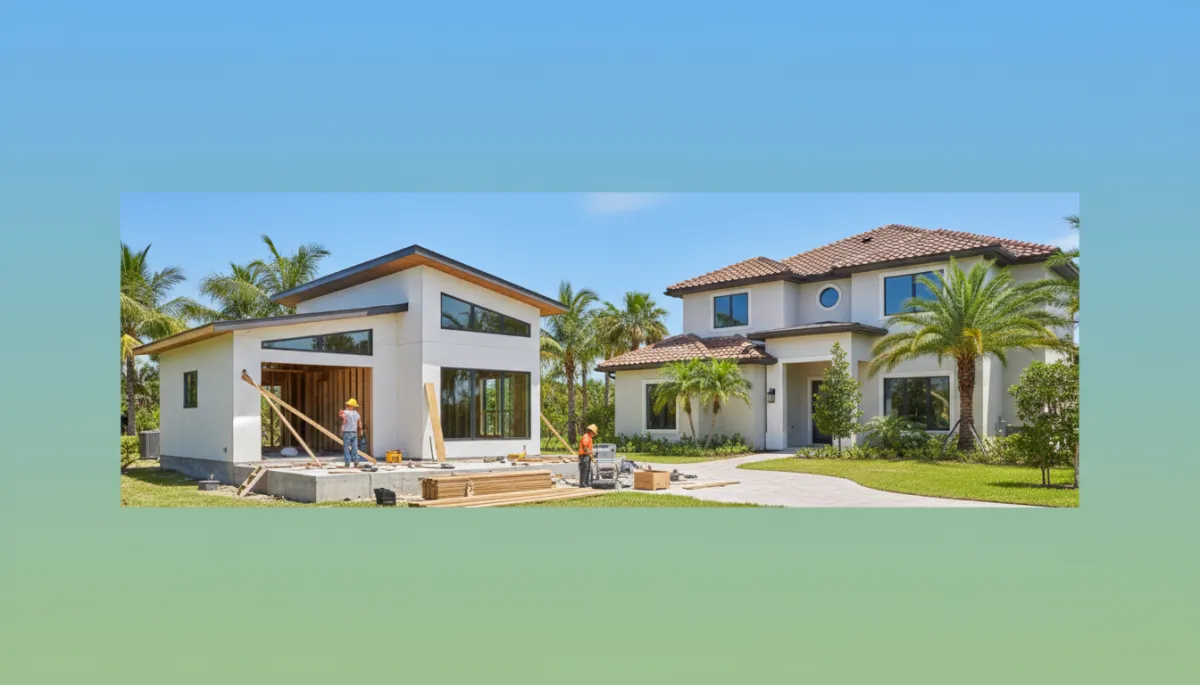
ADU Construction in Florida: Legal Insights
ADU Construction Florida, Accessory Dwelling Units, LK Homes
What Is an ADU and Is It Legal on My Property in Florida?
LK Homes explains what an ADU is, which Florida properties qualify, and how our team makes it simpler than you expect to add a second home — and a second asset — to your land.
What Is an ADU in Florida, Really?
If you have heard neighbors talk about building a “guest house” or “in-law suite” in the backyard and wondered whether you could do the same, you are already thinking about an accessory dwelling unit — or ADU. In Florida, an ADU is a smaller, independent residential unit located on the same lot as an existing single-family home. It has its own entrance, kitchen, bathroom, and sleeping area, so someone can live there full-time, long-term, and comfortably.
ADUs can be used for aging parents, adult children, caregivers, long-term renters, or even as a private home office or guest space. With Florida adding about 467,000 new residents every year, demand for flexible housing is intense — and ADUs have become one of the most powerful, affordable ways to create more homes without buying more land.
📌 Key Takeaway: An ADU is a fully functional second home on the same property as your primary residence — not just a spare bedroom or a shed.
The Four Main Types of ADUs Florida Homeowners Build
Florida law and local zoning codes recognize several common ADU formats. LK Homes designs and builds each of these, tailoring the layout, finishes, and budget to your property and goals.
1. Detached Guest House (Backyard Cottage or Casita)
A detached guest house is a stand-alone small home, usually placed in the backyard or side yard. It has its own foundation, utilities, and privacy, which makes it ideal for:
Long-term rental income
Aging parents who want independence but stay close to family
High-privacy guest space or a future resale feature
Detached ADUs often deliver the strongest value boost because buyers see them as a true second home on the lot.
2. Attached Addition (Side or Rear Extension)
An attached addition shares at least one wall with your primary home but has a private entrance and its own kitchen and bath. Think of it as a mini condo attached to your house. This format works well when your lot is tight but your side or rear yard setback allows expansion.
3. Garage Conversion ADU
A garage conversion turns an existing attached or detached garage into a livable unit. Because the shell is already there, this can be one of the most cost-effective ways to add an ADU. LK Homes evaluates structure, slab, and utilities to make sure the conversion meets Florida Building Code, hurricane resistance, and comfort standards.
4. In-Law Suite or Interior ADU
An in-law suite can be a portion of your existing home reconfigured as a self-contained unit — for example, a wing with its own entrance, or a finished lower level in markets where that is common. The key is that the space functions independently, with a kitchenette or full kitchen and a private bath, even if it remains under the same roof as the main home.
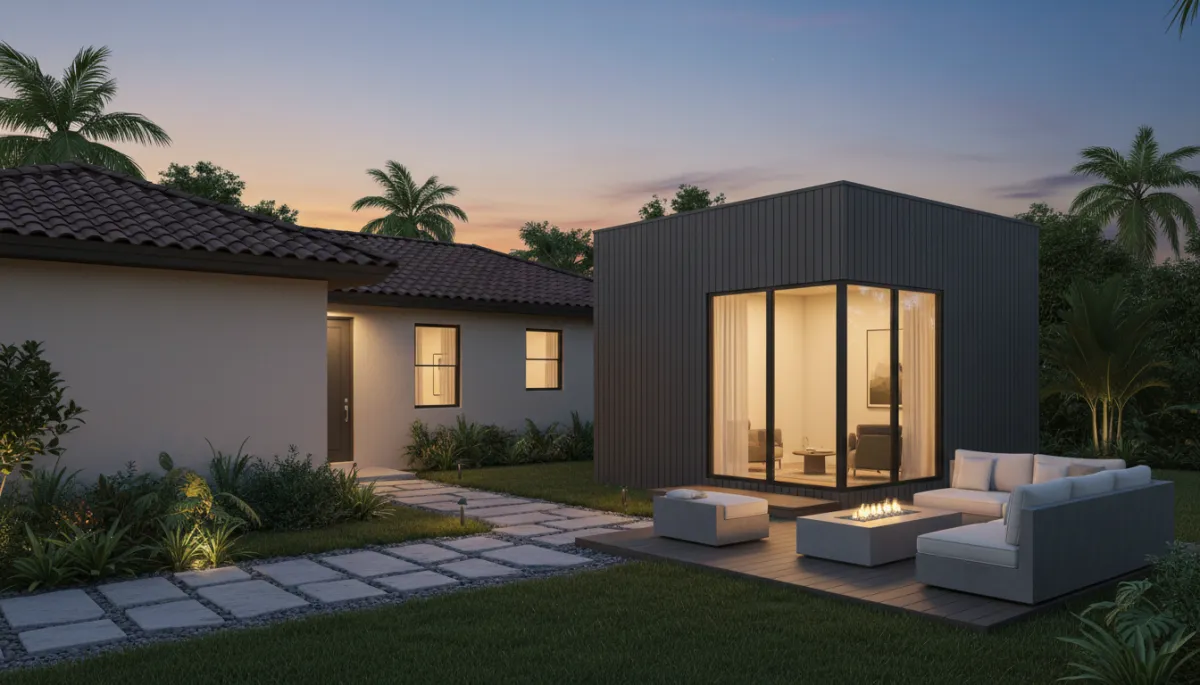
Well-designed ADUs feel like true second homes, boosting comfort and resale value.
Why ADUs Are Surging in Florida Right Now
Florida is now at the center of the national ADU conversation. The state ranks second in the country, with about 18% of all U.S. ADU permits issued here. That is a huge share for one state — and it is driven by population growth, housing costs, and recent policy changes that make building an accessory dwelling unit in Florida more attractive than ever.
Recent reforms sometimes referred to as Florida’s 2024 ADU Reform Bill (including measures within the Live Local Act and HB 1339) have:
Reduced discretionary hurdles and streamlined approvals, with many jurisdictions targeting a 45-day maximum permit processing window for compliant ADUs
Cut impact fees by roughly 50% in many programs and capped them so ADUs are not charged more than single-family homes of comparable size
Eliminated owner-occupancy mandates and reduced parking requirements near transit in many areas
At the same time, independent studies show that properties with ADUs sell 42% faster and can command 23–28% higher sale prices compared to similar homes without a secondary unit. When you combine faster sales, higher values, and rental potential with Florida’s ongoing population surge, you can see why more homeowners are exploring ADUs as a smart move.
💡 Pro Tip: Check programs like the Florida Housing Finance Corporation’s SHIP program for potential support if you plan to rent your ADU as affordable housing.
First-Person Builder Perspective: Most Florida Owners Are Sitting on Buildable Land
Speaking as a builder who walks Florida lots every week, here is what we see at LK Homes: far more properties can support an ADU than their owners realize. People assume their yard is too small, their zoning is too strict, or their HOA will automatically say no. Many never check. Meanwhile, they are paying taxes, insurance, and maintenance on land that could be earning income or housing family members safely and comfortably.
When we review a site, we are often able to show a homeowner that a compact detached guest house or a carefully designed attached addition fits within setbacks, height limits, and utility capacity. In other words, they have been living on a second asset for years without realizing it. Our job is to translate confusing zoning charts and building codes into a clear yes, no, or “yes, if we adjust the design this way.”
Five Things to Check Before You Assume You Can or Cannot Build an ADU
Every Florida city and county has its own rules, and many HOAs add another layer. Still, the same five factors almost always determine whether an ADU is legal on your Florida property.
Zoning District — Your zoning code (for example, R-1, R-2, or a transect zone in Miami) controls whether accessory dwelling units are allowed, what types are permitted, and whether they are by-right or require a special exception. LK Homes helps you pull your parcel data and interpret the rules so you do not have to decode legal language alone.
Lot Size — Many jurisdictions require a minimum lot size for detached or attached ADUs, or they limit ADU square footage to a percentage of the main home. Even modest lots can qualify for a smaller in-law suite or garage conversion, so do not rule yourself out based on lot size without a professional review.
Setbacks and Height — Setbacks determine how close you can build to property lines and to your main home. A detached guest house might need to sit behind the primary structure and maintain 5–10 feet from side and rear lines, depending on local code. Height limits can also influence whether a two-story ADU is possible or whether a single-story design makes more sense.
HOA Rules and Deed Restrictions — Even if your city allows ADUs, your homeowners’ association or recorded covenants may restrict second units, rentals, exterior changes, or parking. We always recommend pulling your HOA documents and, when needed, working with your board early. LK Homes can provide conceptual plans and site diagrams that help secure approvals when they are possible.
Utility Capacity — Sewer, water, and electrical service must be able to support another dwelling. In many cases, we can extend and upgrade existing lines cost-effectively. In others, septic capacity, well limitations, or transformer loads require more careful planning. A preliminary utility review is part of LK Homes’ feasibility step before we ever submit a permit set.
📌 Key Takeaway: Do not disqualify your property based on guesswork. A zoning and site review from an experienced builder is often the difference between “probably not” and “yes, and here is how.”
Step-by-Step: How to Find Out if Your Florida Property Qualifies for an ADU
If you want a clear answer to the question “Can I build an ADU on my property in Florida?”, here is the process LK Homes typically follows with homeowners.
1. Confirm Your Jurisdiction and Zoning
First, we identify whether your home sits inside city limits or in unincorporated county land. That determines which zoning code and ADU rules apply. We then pull your zoning designation and read the sections that deal with accessory dwelling units, guest houses, or secondary suites. Because Florida has no single statewide ADU zoning law yet, this local step is crucial.
2. Evaluate Your Lot and Existing Structures
Next, we review your survey, lot dimensions, and the footprint of your current home, driveway, and any sheds or garages. This tells us where a detached guest house could sit, whether an attached addition is practical, or if a garage conversion is the most efficient path. We overlay setbacks, easements, and potential utility routes so you can see options on paper before spending a dollar on construction.
3. Check HOA and Private Restrictions
If you live in an HOA community, we help you interpret your covenants and, when appropriate, prepare materials for architectural review. In non-HOA areas, we still review recorded deed restrictions to make sure there are no private limitations on additional dwellings or rental activity.
4. Align the Design With ADU Zoning Requirements
Once we confirm that an accessory dwelling unit in Florida is allowed on your parcel, we design to the rules — not around them. That means:
Staying within maximum square footage and height
Respecting required setbacks and lot coverage limits
Providing required parking, if applicable, or leveraging parking reductions where current law allows
This code-first approach reduces redesigns, shortens review times, and positions your permit for approval within the new, faster processing timelines many jurisdictions have adopted under the 2024 reforms.
5. Submit for Permits and Navigate Reviews
Finally, we compile architectural drawings, engineering, energy calculations, and all required forms, then submit your ADU permit package. Thanks to Florida’s 2024 ADU-focused reforms, many cities and counties now target a 45-day maximum review window for complete, code-compliant submittals. LK Homes tracks comments, responds to plan reviewers, and keeps you updated so there are no surprises.
💡 Pro Tip: Working with a builder who understands both construction and permitting can shave weeks off your timeline and help you take full advantage of reduced impact fees.
Real-World Success Story: From “I Doubt It” to Breaking Ground in 60 Days
When Maria and Luis bought their three-bedroom home in Central Florida, they assumed their narrow lot meant they would never be able to build a guest house for Maria’s mother. After hearing about ADUs on a local news segment, they reached out to LK Homes “just to see” if anything was possible. Maria’s first words on our initial call were, “Our yard is tiny, so I’m sure this is a long shot.”
Our team pulled their zoning information, reviewed the survey, and visited the property. The zoning allowed accessory dwelling units as long as they were under 800 square feet, placed behind the main home, and within specific setbacks. By carefully positioning a 620-square-foot detached ADU along the rear property line, we created enough room for a one-bedroom cottage with a covered porch, while still preserving a small yard and code-compliant parking.
We handled the full design, structural engineering, and permit application. Thanks to the streamlined review timelines introduced under Florida’s 2024 ADU reforms, the city approved their permit in just under 45 days. Site work began less than two weeks later. From their first call to breaking ground, only about 60 days passed.
Today, Maria’s mother lives independently in the new cottage, with a full kitchen, accessible bathroom, and her own entry. Maria and Luis know that if their needs change, the ADU can become a long-term rental or a private office. They have effectively created a second home — and a second income option — on the land they already owned.
ADUs as Generational Wealth Tools, Not Just Additions
At LK Homes, we encourage clients to think of an ADU as a second asset on the same piece of land, not simply an addition. When you add a well-designed accessory dwelling unit in Florida, you are:
Increasing your property’s resale value, often by 23–28% based on current market data
Creating a long-term rental stream that can help pay your mortgage or fund retirement
Building flexible space that can house adult children, aging parents, or future caregivers without sacrificing privacy
Over time, as Florida continues to grow and land becomes more expensive, properties with legal, well-built ADUs are likely to stand out even more. They sell faster, they appraise higher, and they give your family options. That is what we mean when we say an ADU is a generational wealth tool hiding in plain sight.
Why Florida Homeowners Choose LK Homes for ADU Projects
LK Homes is a Florida new-construction specialist focused on “Building Dreams Within Reach.” We approach ADUs the same way we approach custom homes and steel buildings — as long-term investments that must balance affordability, durability, and design quality. For busy homeowners, the biggest relief is that we handle design, permitting, and construction under one roof.
Design: We translate your goals into floor plans that meet Florida Building Code, local ADU zoning, and your budget. From detached guest houses to in-law suites, every plan is tailored to your lot.
Permitting: Our team manages submittals, coordinates with planning and building departments, and responds to comments. You never have to stand in line at the permit office or guess what a reviewer is asking for.
Construction: We build with Florida’s climate in mind, from wind loads and moisture control to energy-efficient systems. Our crews maintain clean, safe job sites and respect your neighbors throughout the build.
Because we see the full picture — design, approvals, and construction — we can also help you align your ADU project with broader housing initiatives and incentives, including local implementations of statewide reforms and programs like SHIP. When you are ready, you can also review the text of Florida’s recent ADU-related legislation directly on the state site for deeper context: HB 1339 – Live Local Act Enhancements.
Frequently Asked Questions About ADUs in Florida
1. What is an ADU in Florida, in simple terms?
An ADU, or accessory dwelling unit, is a smaller, self-contained home on the same property as your primary residence. It has its own entrance, kitchen, bathroom, and sleeping area. In Florida, ADUs can be detached guest houses, attached additions, garage conversions, or in-law suites inside the existing home, as long as they meet local zoning and building codes.
2. Are ADUs legal on all residential properties in Florida?
Not yet. Florida does not have a single statewide rule that forces every city and county to allow ADUs in all residential zones. Instead, each jurisdiction sets its own standards. Many are now ADU-friendly due to housing pressure and recent reforms, while others remain restrictive. The only way to know for sure is to check your specific zoning district, HOA rules, and site conditions — something LK Homes can do for you as a first step.
3. How long does it take to permit and build an ADU in Florida?
Timelines vary by city and county, but Florida’s 2024 ADU-focused reforms encourage faster processing. Many jurisdictions now aim for permit review within about 45 days for complete, code-compliant applications. Construction for a typical detached ADU can range from several months to close to a year, depending on size, site conditions, and material availability. LK Homes will give you a realistic schedule after we review your property and preferred ADU type.
4. Will an ADU increase my property taxes and insurance?
Adding an ADU generally increases your property’s assessed value, which can raise taxes and insurance. However, that increase is typically more than offset by higher resale value and potential rental income. Some proposed state bills have explored tax relief for certain ADUs, and local incentives may be available in specific areas. We recommend discussing your plans with your tax professional and insurance agent, using preliminary drawings and cost estimates we provide.
5. How do I get started with LK Homes on an ADU project?
The easiest way to begin is with a free consultation. We will review your address, zoning, and a recent survey, then talk through your goals — whether that is housing family, generating rental income, or preparing your property for resale. From there, we can outline feasibility, budget ranges, and next steps for design, permitting, and construction so you can make an informed decision with confidence.
Ready to See If Your Florida Property Can Support an ADU?
You do not have to guess whether an ADU is legal on your property or navigate the process alone. LK Homes is here to turn a confusing stack of zoning codes and permit forms into a clear, step-by-step path toward a second home on your land. In a state where properties with ADUs sell faster, command higher prices, and serve growing families, exploring your options is one of the most powerful financial moves you can make.
Schedule your free ADU consultation with LK Homes today and find out whether you are already sitting on the perfect spot for a detached guest house, attached addition, garage conversion, or in-law suite. Together, we will explore how to turn your property into two homes on one lot — and a lasting asset for your family’s future.
