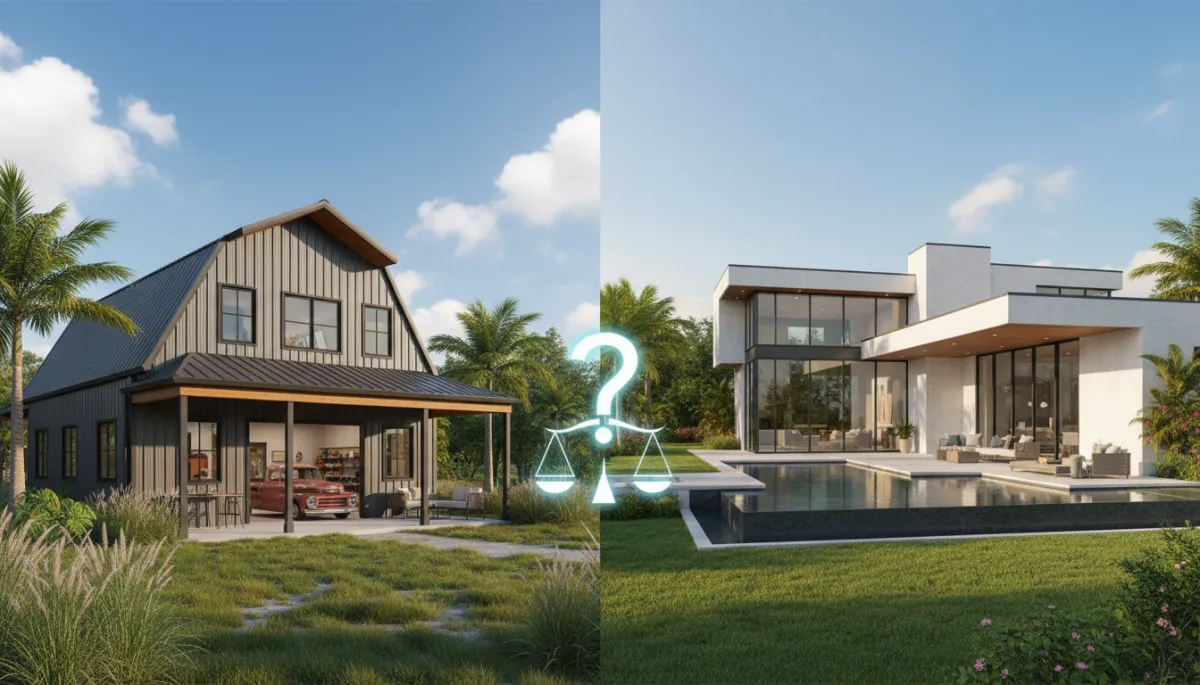
Barndominium vs Custom Home: Florida Financial Guide
Barndominium vs Custom Home Florida, Homebuilding, Financial Comparison
Barndominium vs Custom Home in Florida: Which Makes More Financial Sense?
If you own land in Florida and are torn between building a barndominium or a traditional custom home, you are not alone. At LK Homes, we meet buyers every week who are stuck in analysis paralysis, trying to compare cost per square foot, timelines, financing, and long‑term value. This guide lays out the real numbers and trade‑offs so you can choose the structure that truly fits your life and your long‑term financial goals.
First, a Builder’s Honest Take: These Aren’t Competing Products
Speaking as a Florida builder that designs and constructs both steel barndominiums and custom homes (including ICF construction), we see a core truth that most comparison articles miss: a barndominium and a custom home are different tools for different lives. One is not universally “better” or always cheaper. The right choice depends on how you plan to use the property, how long you’ll own it, and what you expect from resale and financing—not just today’s cost per square foot.
Our role at LK Homes is not to push you toward one option. We build both across Florida, from rural barndos with massive shops to coastal ICF custom homes engineered for 200+ mph winds. Our job is to help you see the full picture before you sign a contract, so you end up with a structure you never want to leave—and that still makes sense on your balance sheet ten or twenty years from now.
Florida’s 2025–2026 Barndominium Boom: Why This Decision Feels So Urgent
Florida has seen a surge of interest in barndominiums leading into 2025 and 2026. Rising traditional home prices, remote work, and a desire for more acreage and shop space have pushed many landowners to consider steel structures. Nationally, barndominium sales have climbed sharply, and Florida’s rural counties—from the Panhandle to Central Florida—are now dotted with new steel homes, shops, and combination living/work spaces.
This boom is also changing the financial landscape. Appraisers and insurance carriers are seeing more engineered steel barndominiums, which means:
More comparable sales (“comps”) in rural markets, easing some appraisal challenges that early barndo owners faced.
Insurance companies increasingly recognizing engineered steel systems and offering significant premium reductions versus standard wood framing.
At the same time, the interior finish level of barndominiums has climbed. Many 2025–2026 Florida barndos feature the same quartz countertops, custom cabinetry, and spa bathrooms you’d expect in a high‑end custom home. The line between “barndominium” and “house” is blurring inside—even if the structure and shell are different.
Real Cost Comparison: Barndominium vs Custom Home in Florida
Cost Per Square Foot (Shell to Fully Finished)
For this comparison, we’ll use realistic 2025–2026 Florida ranges rather than national averages that don’t reflect our building codes or hurricane requirements. Within Florida, you can expect approximately:
Build Type Typical Florida Range (Finished) Notes Steel barndominium $95–$185 per sq ft Larger footprints & simpler forms trend toward lower end; luxury finishes push higher. Custom home (block, frame, ICF) $150–$350 per sq ft Coastal, high‑design, or complex roofs trend toward upper range.
At first glance, the barndominium looks clearly cheaper. But it’s important to compare apples to apples. A barndo with high‑end finishes, custom kitchens, and designer baths can land closer to the upper end of that $95–$185 range—sometimes overlapping with simpler custom homes. And as recent Florida cost studies show, well‑finished barndominiums in our state often fall in the $160–$230 per sq ft “sweet spot” once you account for site work and code requirements.
📌 Key Takeaway: A barndominium can be cheaper per square foot, especially for large, open spaces and modest finishes. Once you push luxury finishes and complex layouts, the cost gap between a barndo and a custom home narrows quickly.
Construction Timeline: How Fast Can You Move In?
Barndominium: Typically 4–6 months from slab to move‑in for a standard Florida project, assuming permitting and utilities are lined up.
Custom home: Usually 8–14 months, depending on design complexity, weather, labor availability, and supply chains.
If you’re carrying a construction loan, paying rent while you build, or eager to get on your land quickly, that time difference has real financial weight. A shorter build can mean months of saved carrying costs and less exposure to material price swings.
Financing: Who Will Actually Lend on Your Project?
Financing is where many Florida landowners discover that “barndominium vs house” is not just a design question—it’s a lender question.
Barndominium financing: Often requires regional or local lenders who are familiar with steel construction and comfortable using cost‑based appraisals when comps are thin. Some national lenders still treat barndos as “non‑traditional,” which can limit options or require higher down payments.
Custom home financing: Typically fits cleanly into standard construction‑to‑permanent loan products. Most banks understand block, frame, and ICF homes, and appraisers can usually find comparable sales more easily.
If you plan to use USDA Rural Development or other specialty programs, check eligibility early. For example, the USDA Rural Development loan map (see the official eligibility map on the USDA site) can help you determine whether your location and structure type qualify before you invest in detailed plans.
Insurance Costs and Storm Performance
In Florida, insurance and storm resistance are not side issues—they are core financial considerations. Two key facts:
Steel barndominiums can qualify for 30–50% insurance premium reductions compared to standard wood‑frame construction, thanks to their non‑combustible framing and engineered wind performance, especially as more carriers recognize these systems.
ICF custom homes (insulated concrete forms) deliver 50–60% monthly energy savings and 200+ mph wind resistance, rivaling or exceeding steel barndominiums on key Florida metrics. Properly detailed, an ICF home can be one of the most storm‑resistant structures you can build under the Florida Building Code.
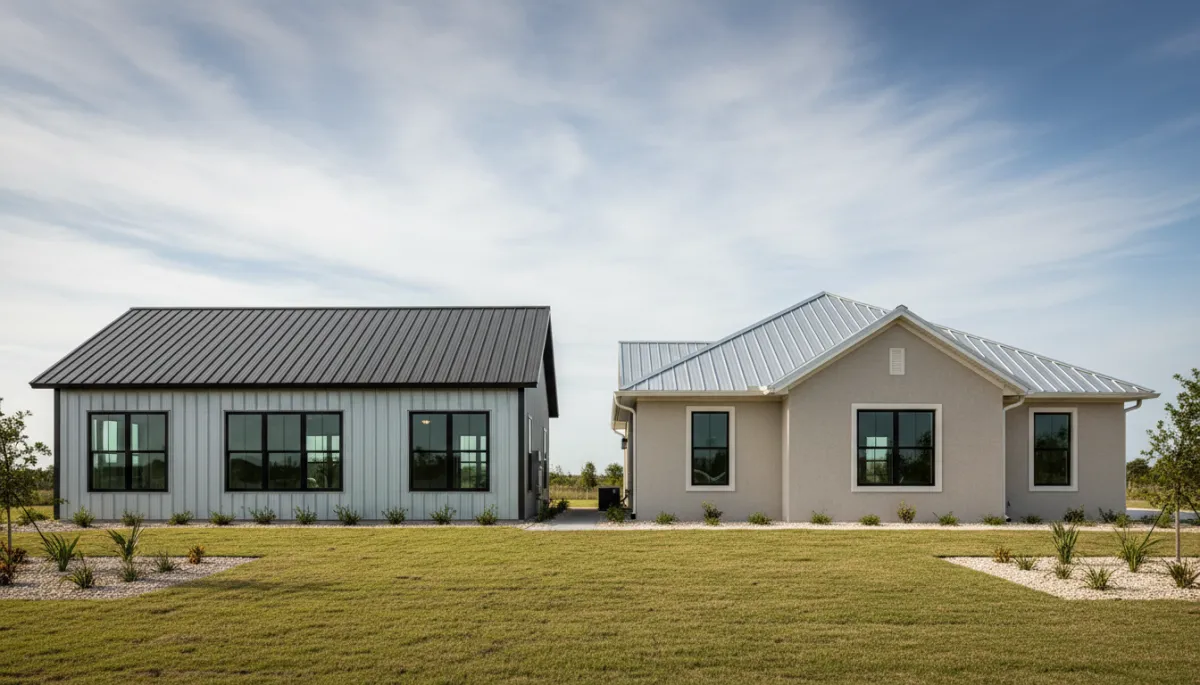
Steel and ICF construction can cut insurance costs and boost storm resilience over decades.
Over a 20‑ or 30‑year ownership period, lower insurance and energy bills can offset a higher initial build cost. For many of our clients, the “cheapest” structure up front is not the cheapest to own over time.
Appraisal, Resale Value, and Market Acceptance
Appraisal is where barndominiums have historically struggled in Florida—but the picture is improving. In markets with few barndo sales, appraisers have to lean heavily on the “cost approach” and may be conservative. That’s changing as more barndominiums are sold, particularly in rural counties where they’re now a recognized property type.
Barndominiums: Appraisal challenges remain in some suburban or mixed neighborhoods with limited comps, but rural markets are building a stronger sales history. As inventory grows through 2025–2026, lenders are gradually becoming more comfortable with valuations that reflect true replacement cost and buyer demand.
Custom homes: Benefit from decades of established comps. Appraisal and resale value are typically more predictable, especially in platted subdivisions or established residential corridors.
💡 Pro Tip: If resale and appraisal comparability are top priorities, a custom home—especially one built with mainstream materials like block or ICF—still has a smoother path in most Florida markets. A barndominium can perform very well, but you’ll want a builder and lender who understand how to document costs and support the appraiser.
Long‑Term Maintenance and Operating Costs
Maintenance is often where barndominiums shine, but again, details matter.
Barndominium: Steel framing and metal roofing are resistant to rot, termites, and many of the issues that plague wood‑frame homes. Exterior repainting and roof maintenance intervals can be longer. However, condensation control, insulation quality, and proper detailing are critical in Florida’s humid climate. Poorly detailed barndos can develop moisture issues that offset their structural advantages.
Custom home: Maintenance depends heavily on materials. Block and ICF walls with impact windows and quality roofing can be extremely low‑maintenance. Traditional wood framing with basic finishes can require more frequent exterior work and be more vulnerable to pests and moisture.
In both cases, your long‑term costs will be driven by the quality of design and construction, not just the label “barndominium” or “custom home.”
Success Story: How One Florida Landowner Finally Chose with Confidence
When Mark and Jessica bought 10 acres in Central Florida, they were convinced a barndominium was the obvious choice. They needed a large shop for equipment, wanted open living space, and had seen dozens of barndo tours online. But every time they talked to a lender or read another article, new questions popped up: Would it appraise? Would they regret not building a “real house”? Would buyers in ten years understand what they had built?
By the time they called LK Homes, they had spent months in spreadsheets and Facebook groups without feeling any closer to a decision. Instead of pushing them toward one product, we sat down and built two side‑by‑side scenarios based on their actual land, budget, and lifestyle:
Scenario A: 3,000 sq ft steel barndominium with 1,800 sq ft of living space and 1,200 sq ft of shop, mid‑range finishes, and a 5‑month build timeline.
Scenario B: 2,400 sq ft ICF custom home plus a separate 1,200 sq ft detached shop, slightly higher per‑square‑foot cost, and a 10‑month build timeline.
We walked them through upfront construction costs, projected insurance premiums (including the 30–50% savings potential for steel and the energy savings for ICF), likely appraisal paths, and realistic resale scenarios for their specific county. We also looked at zoning and how accessory structures would be treated under local rules and the Florida Building Code.
In the end, Mark and Jessica chose the ICF custom home with a separate shop—not because the barndominium was a bad idea, but because they realized resale comparability and a more traditional house footprint mattered to them long‑term. The ICF structure gave them hurricane performance and energy efficiency that rivaled the barndo, with an appraisal and financing path their lender was more comfortable with. They still got the shop they needed, and they moved forward knowing they had seen the full financial picture from both angles.
📌 Their feedback to us: “Once we saw the real numbers and not just internet opinions, the choice was obvious for our family. We stopped second‑guessing and actually enjoyed the build.”
Six Questions to Answer Before You Choose Barndominium or Custom Home in Florida
Do you need significant shop or equipment storage space? If your daily life involves tractors, trailers, boats, or a full‑time workshop, a barndominium’s integrated shop can be extremely cost‑effective. If your storage needs are modest, a traditional home with a detached garage or smaller shop might offer better resale and lender comfort while still meeting your needs.
How important are resale value and appraisal comparability? If you plan to sell or refinance within 5–10 years, a custom home generally offers a clearer path. In rural markets with a growing barndo presence, a well‑built barndominium can still appraise and sell well—but you’ll want to understand how many similar sales exist in your county today, not just in other states or online groups.
What is your financing situation? If you’re using a conventional construction‑to‑perm loan with a large national bank, a custom home may be the smoother choice. If you have a strong relationship with a regional lender open to steel construction—or you’re bringing substantial cash—a barndominium may be just as viable. Either way, talk to lenders early, before you fall in love with a design that’s difficult to finance.
How long do you plan to own the property? The longer you plan to stay, the more weight you should give to operating costs (insurance, energy, maintenance) and how well the layout fits your lifestyle. Over 20–30 years, the difference between an efficient ICF home and a basic structure can be six figures in energy savings alone. Similarly, the low‑maintenance nature of steel can really shine over decades of Florida weather.
What finish level are you targeting? If you’re planning truly high‑end interiors—custom cabinetry, designer fixtures, intricate tile—recognize that those costs are similar whether they go into a barndo or a custom home. In that case, the shell cost difference shrinks, and factors like appraisal, layout, and neighborhood compatibility may matter more than raw cost per square foot.
What does your county zoning allow? Some Florida counties are very friendly to barndominiums; others have restrictions on metal exteriors, mixed‑use structures, or large shops attached to living space. Before you commit, verify zoning, setbacks, and any design requirements with your local planning department—and make sure your builder is designing to the current Florida Building Code and local amendments.
Rethinking the Question: Not “Barndominium or House?” but “Which Tool Fits Your Life?”
When you strip away the internet debates, the decision between a barndominium and a custom home in Florida isn’t a contest. It’s a fit test. A steel barndominium is a powerful tool for certain lifestyles—people who live in their shop, run home‑based trades, or prioritize large, flexible spaces over traditional curb appeal. A custom home (especially in ICF or high‑performance block) is a powerful tool for others—those who want conventional appraisal, neighborhood compatibility, and a layout that feels familiar to future buyers.
At LK Homes, “Building Dreams Within Reach” means matching the tool to the life, not the other way around. We’ll design and build a steel barndominium or a custom home—or even a hybrid approach—but only after we’re confident you understand the financial, practical, and lifestyle implications of each path on your specific piece of Florida ground.
FAQ: Barndominium vs Custom Home in Florida
1. Is a barndominium cheaper than a house in Florida?
Often—but not always. A Florida barndominium typically ranges from about $95–$185 per square foot fully finished, while a custom home ranges from about $150–$350 per square foot depending on finish level and construction method. For simple, large, open spaces and modest finishes, a barndo is usually more cost‑effective. Once you add high‑end finishes and complex layouts, the cost gap can narrow or even disappear. The only way to know for sure is to price both options for your specific design and site.
2. Which is better for hurricanes: barndominium or custom home?
Both can perform exceptionally well when engineered correctly under the Florida Building Code. Engineered steel barndominiums are designed for high wind loads and can qualify for substantial insurance discounts. ICF custom homes offer 200+ mph wind resistance and outstanding impact performance. The key is not the label, but the engineering, detailing, and materials your builder uses. At LK Homes, we focus on storm‑resistant design in both steel and ICF options.
3. Are barndominiums hard to finance and appraise in Florida?
They can be more challenging than traditional homes, especially in areas with few comparable sales. However, as more barndominiums are built and sold across Florida’s rural markets, appraisers have better data to work with, and some lenders are becoming more comfortable with steel structures. Custom homes still have the smoother path overall, but a well‑documented, engineered barndo with a knowledgeable lender and builder can appraise successfully in many counties today.
4. Which option gives me better long‑term value?
Long‑term value is a combination of resale potential, operating costs, and how well the home fits your life. A barndominium may win on initial cost and integrated shop space; an ICF custom home may win on energy savings, insurance stability, and broad buyer appeal. The “better” value depends on how long you’ll live there, how you’ll use the property daily, and what you expect from resale. Our process at LK Homes is built around modeling those trade‑offs for your specific situation, not guessing based on averages.
5. How do I know which path is right for my Florida land?
Start with the six questions above—especially how you’ll use the property, how long you’ll own it, and what your financing and zoning realities look like. Then sit down with a builder who constructs both barndominiums and custom homes and is willing to show you a side‑by‑side comparison, not just sell you their favorite product. That’s exactly how we work at LK Homes: we design both options, price them transparently, and help you choose the one that makes the most sense for your life and your numbers.
Ready to See Your Own Numbers Side by Side?
If you’re staring at your Florida land and wondering whether a barndominium or a custom home is the smarter move, you don’t need more generic articles—you need a clear comparison built around your property, your budget, and your lifestyle. LK Homes is a Florida new‑construction specialist that designs and builds both steel barndominiums and custom homes, including high‑performance ICF construction. We serve landowners across the state and help them make confident decisions before a single footing is poured.
Schedule a free, no‑pressure consultation, and we’ll walk you through a barndominium vs custom home financial comparison tailored to your land. No agenda, no hard sell—just an honest look at which structure is the right tool for the life you want to build in Florida.
