
Build New vs Buy Existing: Florida Real Estate 2025
Florida Real Estate, Building New vs Buying Existing
Why Building New Is Smarter Than Buying Existing in Florida Right Now
If you’re trying to decide whether to build a new home or buy an existing one in Florida’s 2025 market, the numbers have shifted more than most people realize. On paper, resale listings may look cheaper. But when you factor in insurance, renovation risk, energy bills, and long-term durability, building new — especially with modern systems like ICF — often wins by a wide margin. This article breaks down the real math, the current market, and why LK Homes believes new construction is the smarter move for Florida families right now.
Florida’s 2025 Market: Why the Old Math No Longer Works
For years, the common wisdom was simple: buying an existing home is cheaper, building is a luxury. In 2025 Florida, that assumption is increasingly wrong — and in some cases, dangerously expensive over time.
The statewide median price for a single-family home is hovering around the low $400,000s, with a median sales price of about $413,990 at the end of 2025 and a slight year-over-year decline. Inventory is up roughly 24–25% compared to 2024, with around 127,000 active listings and about five months of supply for single-family homes. On the surface, that sounds like good news for buyers looking at existing homes — more choice, slightly softer prices, and a bit more leverage at the negotiation table.
But here’s the part most buyers miss: a huge share of that inventory is older housing stock with aging roofs, dated construction, and expensive insurance. At the same time, new construction has become more cost-competitive, especially when you factor in long-term ownership costs and Florida’s strict modern building code for wind and energy performance.
The Real Financial Comparison: New Build vs. Existing Home in 2025 Florida
Let’s compare two realistic paths for a Florida family in 2025: buying a 20–30-year-old resale home versus building a new custom home with LK Homes. Numbers will vary by county and neighborhood, but the structure of the math is consistent statewide.
1. Purchase Price vs. Total Project Cost
A typical 1990s or early-2000s Florida home might list around the current median — say $410,000–$430,000 depending on location. At first glance, a custom build might be quoted in a similar base range for a comparable-size home on your lot. Many buyers stop the analysis there and assume the resale is cheaper because the sticker price is similar or slightly lower. That’s a mistake.
2. Inspection Risk and Renovation Costs on Older Homes
In today’s Florida market, many existing homes come with baked-in renovation requirements just to be livable, insurable, and efficient:
Roofs approaching or past 15–20 years often need replacement immediately or within a few years, with average replacement costs in Florida ranging from $15,000 to $25,000.
Older HVAC, plumbing, and electrical systems can trigger costly repairs — or worse, insurance pushback until they’re upgraded.
Many resale homes need $30,000–$80,000 in cosmetic and functional renovations to meet a modern family’s expectations for kitchens, baths, layouts, and storage.
When you add realistic renovation and repair budgets to the purchase price, that “cheaper” existing home can quietly become a $500,000–$550,000 project — without any of the benefits of new construction standards or warranties.
3. Insurance: The Hidden Cost That Blows Up the Old Equation
Homeowners insurance is where the Florida buy-vs-build decision changes dramatically in 2025. Statewide, average premiums now range from roughly $4,500 to over $8,000 per year depending on location and coverage, with Florida among the most expensive insurance markets in the country. But the age and construction of your home are what really move the needle.
Multiple insurance analyses show that homes built before modern codes and mitigation standards can cost 30–50% more to insure, and many carriers are increasingly unwilling to insure homes built before 2002 without significant upgrades. In practice, that can mean:
A newer, code-compliant home in an inland area might see premiums in the $3,000–$4,000 range annually.
A similar-size older home in the same area can easily run $4,500–$6,000+ per year — and significantly higher in coastal zones.
Over 10 years, that’s $15,000–$20,000 or more in extra premiums for the older home — money that never improves the property, never increases comfort, and never comes back to you at resale. New construction built to the current Florida Building Code, one of the strictest in the nation for wind resistance and energy efficiency, is designed to qualify for the best mitigation credits and the most favorable insurance treatment available in this market.
4. Energy Efficiency and Monthly Cash Flow
Florida’s heat and humidity make energy performance more than a nice-to-have — it’s a major monthly line item. Most existing homes in Florida are wood-frame construction with average insulation and older windows. By contrast, an LK Homes ICF (Insulated Concrete Form) or steel home is engineered from the ground up for efficiency and comfort.
ICF construction routinely delivers 50–60% monthly energy savings compared to older wood-frame homes. On a typical $300–$400 monthly power bill for an older home, that kind of savings can put $150–$240 back in your pocket every month — $1,800–$2,880 per year. Over 10 years, that’s another $18,000–$28,000 in avoided costs, on top of lower maintenance and better storm performance.
5. Appreciation and Long-Term Demand for New Construction
Florida continues to add roughly 467,000 new residents each year, according to U.S. Census data, sustaining long-term demand for quality housing even as the market cools from pandemic peaks. At the same time, 2025 data shows six of the top ten markets with the largest rent declines are in Florida — a clear sign of oversupply in older rental and resale inventory, not in well-built, modern homes that meet today’s standards.
New homes built to current code, with energy-efficient systems and storm-resilient construction, are positioned to hold value and remain desirable as insurance companies, lenders, and buyers become more selective about risk. In other words, you’re not just buying a home; you’re buying into the segment of the market with the strongest long-term fundamentals.
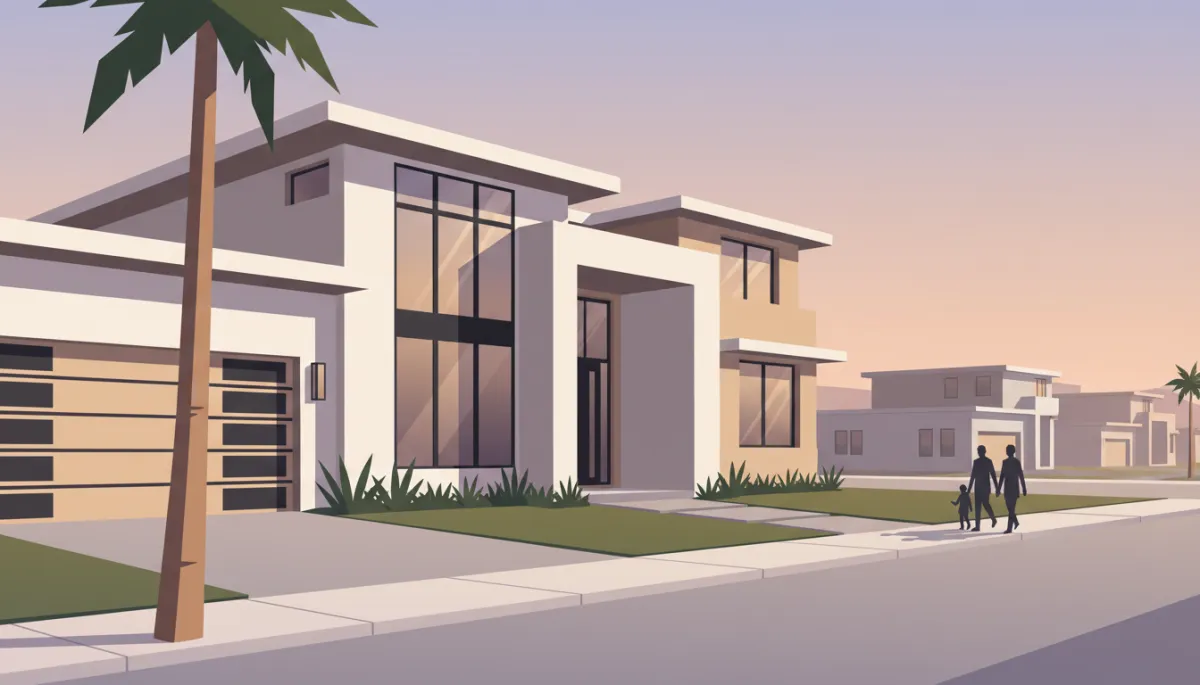
New ICF homes combine lower bills, stronger storm performance, and higher buyer demand.
A Real Florida Family: Six Months of Frustration, Then a Pivot to Building New
Consider the Martinez family, a real-world example of how this plays out. In early 2025, they started shopping for a three- to four-bedroom home in Central Florida. Their budget was around $475,000. Like many families, they assumed buying an existing home would be faster and cheaper than building new.
Over six months, they toured more than 20 homes. They wrote offers on four:
Twice they were outbid by cash investors, even in a cooling market.
One home “in great shape” turned out to need a new roof within two years and had an inspection list full of deferred maintenance — $40,000–$50,000 in near-term work.
Another had a layout that didn’t work for their multigenerational household, but reconfiguring walls and kitchen plumbing pushed the renovation budget into six figures.
Their insurance quotes on older homes were coming in between $5,500 and $7,000 per year, partly due to roof age and pre-2002 construction. That’s when they started to ask a different question: What would it cost to build exactly what we want instead of compromising on a resale?
The Martinez family came to LK Homes with a simple wish list: a true split-bedroom plan, a dedicated office, a flexible space for their parents, and a highly efficient home with predictable bills. Together, we designed a fully custom ICF home on a homesite they already owned. The all-in project cost — including design, construction, and finishes — landed around $510,000. That’s slightly higher than their initial purchase budget, but here’s what changed the equation:
Insurance quotes dropped by more than $1,500 per year compared to the older homes they’d been considering, thanks to new construction and modern mitigation features.
Their projected energy bills were 50–60% lower than the typical resale home they toured, saving an estimated $200+ per month.
They received builder warranties on the structure, mechanical systems, and finishes — protection no existing home could offer.
When they compared a 10-year ownership horizon, the total cost of their custom LK Homes build was effectively comparable to buying an older home and renovating — but with a brand-new, hurricane-resilient, energy-efficient home designed precisely for their family. That’s the reality many Florida buyers discover once they look beyond the listing price.
A Builder’s Take: Why the Buy vs. Build Decision Isn’t as Close as It Looks
Speaking as a Florida builder, I see the same pattern over and over. On day one, buyers compare a $420,000 resale to a $480,000 new build and assume the resale is the “smart” financial move. But once we walk through the real numbers — roof age, insurance, energy, renovation scope — the gap closes quickly, and often flips in favor of building new, especially with ICF or steel construction.
I’m not dismissive of buyers who choose existing homes. There are valid reasons: a specific historic neighborhood, a truly unique lot, or a timeline that can’t accommodate construction. But in today’s Florida, the buy vs. build decision is almost never as close as people think once you factor in:
Insurance premiums that punish older roofs, outdated construction, and pre-2002 homes.
Renovation risk — both in cost overruns and in discovering hidden defects after closing.
Energy bills that quietly drain hundreds of dollars per month from family budgets.
From where I sit, building new — particularly with high-performance systems like ICF and steel — is less about luxury and more about risk management, cash-flow stability, and long-term resilience. That’s the part of the conversation most buyers never hear until they sit down with a builder who is willing to open the books and do the math with them.
Why LK Homes: Control, Performance, and Protection You Can’t Buy Used
LK Homes is built around a simple promise: “Building Dreams Within Reach.” In practice, that means we give Florida buyers control that no existing home can match, regardless of price point. When you build with LK Homes, you’re not inheriting someone else’s decisions — you’re making your own, with expert guidance at every step.
Construction method: Choose from high-performance ICF or advanced steel options that outperform typical wood-frame homes in energy efficiency, storm resistance, and long-term durability.
Layout and livability: Design your floor plan around your real life — multigenerational living, home offices, hobby spaces, outdoor living, and storage that actually works in Florida’s climate.
Finishes and performance: Select finishes, windows, insulation levels, and mechanical systems that align with your budget and long-term goals, not whatever happened to be trendy when the house was built 20 years ago.
Every LK Homes project is backed by builder warranties on the structure, mechanical systems, and finishes — protection you simply do not get when you buy an existing home. In a state where insurance companies are scrutinizing risk more than ever, that kind of documented quality and compliance with the current Florida Building Code is not just peace of mind; it’s a tangible financial asset.
💡 Pro Tip: When you compare quotes, ask your insurance agent to run side-by-side scenarios: one for a pre-2002 resale home and one for a new-construction ICF or steel home built to the current Florida Building Code. The premium difference over 10 years is often enough to fund upgrades you thought you couldn’t afford.
Six Questions to Ask Before You Choose an Existing Home Over New Construction
If you’re leaning toward buying an existing home, you can still make a smart decision — but only if you ask the right questions. Before you write an offer, sit down with these six:
How old is the roof, and what will it cost to replace? If the roof is older than 15–20 years, assume you’ll be paying for a replacement soon — typically $15,000–$25,000 in Florida. Add that to your effective purchase price and ask whether a new build still looks more expensive.
What are the insurance costs today — and after the next renewal? Get real quotes, not estimates. Ask your insurance agent how the home’s age, roof, and construction type affect premiums. Then compare those numbers to a new-construction scenario. Remember that carriers are tightening underwriting on homes built before 2002.
What does the inspection really reveal? Cosmetic issues are one thing. But if the inspection report is full of structural concerns, electrical or plumbing deficiencies, or moisture problems, you’re not just buying a house — you’re inheriting a punch list that can easily run into tens of thousands of dollars.
What is your realistic renovation budget? Be honest with yourself: are you prepared to invest $30,000–$80,000+ in updates over the next few years? If so, compare that combined cost to a custom new build that gives you exactly what you want from day one, with warranties and modern performance baked in.
What will your monthly energy costs look like? Ask for the seller’s utility bills and compare them to projected costs on a new ICF home. If you can cut your power bill by 50–60%, that’s meaningful monthly cash flow — and a real offset to any difference in mortgage payment.
What would it cost to bring this home up to current code? You don’t have to fully retrofit an older home to the latest Florida Building Code, but major gaps in wind resistance, openings, and structural systems will show up in insurance, safety, and comfort. Price out impact windows, additional strapping, and other upgrades — then compare that to starting with a home that already meets or exceeds today’s standards.
Reframing the Decision: Inheriting Someone Else’s Choices vs. Designing Your Future
At its core, the choice between building new vs buying existing in Florida isn’t just about price. It’s about deciding whether you want to inherit someone else’s decisions — about construction quality, materials, maintenance, and layout — or start with a blank slate built to your standards for your family and your future.
When you buy an existing home, you’re accepting:
The way someone else chose to spend (or not spend) on structure and systems.
The shortcuts or upgrades they made — often invisible until something fails.
A layout designed for a different family, in a different era, with different needs.
When you build a custom home with LK Homes, you’re choosing:
Construction quality that meets or exceeds today’s Florida Building Code for wind and energy performance.
Materials and systems selected for durability, efficiency, and your risk tolerance — not someone else’s budget constraints.
A home designed around how your family actually lives today, with flexibility for how you’ll live tomorrow.
In a state where insurance markets, building codes, and climate realities are all tightening at once, that level of control is not a luxury — it’s a strategic advantage. For many Florida families, the honest, data-driven answer to “should I build or buy a home in Florida?” in 2025 is clear: building new is the smarter, safer, and often more affordable path over the life of the home.
FAQ: Building New vs Buying Existing in Florida (2025)
1. Is building a new home in Florida really more expensive than buying existing?
Not necessarily. The base construction cost of a custom home can be similar to or slightly higher than a comparable resale purchase price. But once you add realistic renovation budgets, higher insurance premiums on older homes, and higher energy bills, the total cost of ownership for an existing home often meets or exceeds that of a new build — especially over a 10-year horizon.
2. How long does it take to build with LK Homes compared to buying?
A typical LK Homes project, from design to move-in, generally takes several months depending on permitting, site conditions, and complexity. Buying an existing home can be faster, but many buyers spend months searching, losing bids, and then renovating after closing. When you look at the full timeline — search, purchase, and renovation — building new is often more predictable and only marginally longer, with a far better end result.
3. Are new homes really that much cheaper to insure in Florida?
While every policy is unique, new homes built to the current Florida Building Code typically qualify for better wind mitigation credits and more favorable underwriting than older homes. In many cases, that translates to hundreds or even thousands of dollars in annual savings compared to pre-2002 homes with older roofs and systems. Over time, those savings materially change the buy vs. build equation.
4. What makes ICF and steel construction better than typical wood-frame homes?
ICF and steel systems offer superior strength, wind resistance, and energy performance compared to standard wood framing. ICF walls, for example, can reduce monthly energy use by 50–60% versus older wood-frame homes, while providing exceptional sound and temperature control. In a hurricane-prone, high-heat state like Florida, those advantages directly impact comfort, safety, and long-term cost.
5. How do I know if building new with LK Homes is right for my family?
If you value control over layout, performance, and long-term costs — and you’re willing to look beyond the sticker price to the full cost of ownership — building new is worth a serious look. The best next step is a conversation. We’ll walk through your budget, your lot (or help you find one), and your priorities, then compare a realistic new-build scenario to what you’d likely face buying existing in your target area.
Ready to See Your Numbers? Schedule a Free Consultation with LK Homes
If you’re weighing new construction vs existing home in Florida in 2025, you don’t need a sales pitch — you need clear, honest numbers tailored to your situation. That’s exactly what we provide at LK Homes. We’ll help you compare:
Total project cost for a custom LK Homes build versus likely all-in costs for a resale purchase and renovation.
Insurance and energy projections for older homes versus new ICF or steel construction.
How different layouts and construction methods support your family’s lifestyle today — and protect your investment for the future.
Schedule a free, no-pressure consultation with LK Homes today and discover whether building new is the smarter move for your Florida dream. You may find, like many of our clients, that the home you thought was out of reach is not only possible — it’s the most financially sound decision you can make in this market.
