Florida ADU Laws 2025: Key Changes for Homeowners
Florida ADUs, Florida ADU laws 2025, Accessory dwelling unit regulations Florida
Florida ADU Laws 2025: What Changed and What It Means for Homeowners
If you were told a few years ago that you couldn’t build an accessory dwelling unit (ADU) on your Florida property, that answer may no longer be true. Between Florida’s 2024 ADU Reform Bill and a wave of local zoning updates, the ground has shifted quickly—creating a window of opportunity for homeowners who move now and confusion for anyone relying on outdated rules.
The Big Picture: Why Florida ADU Laws Matter More Than Ever in 2025
Florida is now the second largest ADU market in the United States, accounting for about 18% of all U.S. ADU permits issued. At the same time, the state is adding roughly 467,000 new residents every year, according to statewide housing data from the Florida Department of Economic Opportunity. That relentless demand for housing is exactly why lawmakers and local governments have started clearing a path for accessory dwelling units.
For homeowners, this isn’t just a policy story. It’s a wealth-building opportunity. Properties with a well‑designed ADU tend to sell 42% faster and command a 23–28% value premium. In other words, the “little house in the backyard” is increasingly one of the most powerful tools Florida homeowners have to grow equity on land they already own.
📌 Key Takeaway: Florida’s ADU reforms are not abstract. They directly affect what you can build, how fast you can permit it, and how much long‑term value you can create from your property.
Old Rules vs. New Rules: What Actually Changed for Florida ADUs
Before 2024, Florida ADU rules were largely shaped by local zoning codes, with only a light “enabling” statute at the state level (Florida Statute § 163.31771). Many cities and counties technically allowed ADUs, but they layered on conditions that made them impractical for real homeowners. Here’s how the landscape looked before the recent reforms—and what’s different now.
Before: Common Barriers That Stopped ADU Projects
Owner‑occupancy requirements: Many jurisdictions required the property owner to live in either the main house or the ADU. That killed projects for owners who might relocate, inherit a property, or want flexibility for future use.
Extra parking requirements: Cities frequently demanded one or more additional off‑street parking spaces for an ADU, even when the lot was small or already fully built out. Converting a garage to an ADU often meant you had to “replace” that parking somewhere else on site—sometimes impossible on a typical Florida lot.
Discretionary review: ADU applications often went through public hearings or subjective design review boards, adding months of delay and uncertainty. A neighbor’s objection could derail an otherwise code‑compliant project.
High impact fees: Local governments sometimes charged ADUs impact fees similar to a full‑size single‑family home, wiping out the financial case for smaller units.
After the 2024 ADU Reform Bill: A Faster, Clearer Path
In 2024, Florida passed a major ADU reform package (often referred to as the 2024 ADU Reform Bill, based on HB 1339 and related measures). Combined with local implementation, the practical result for homeowners is a far more predictable process. Here are the headline changes that matter most in 2025:
45‑day permit processing cap: Jurisdictions now face a maximum 45‑day window to process complete ADU permit applications. That’s a hard cap designed to stop endless back‑and‑forth and give homeowners a clear timeline from submittal to decision.
50% impact fee reduction: Impact fees for qualifying ADUs are now effectively cut in half under the 2024 reforms, making the numbers pencil out for many projects that previously looked marginal.
Parking relief for smaller units: For ADUs under 750 square feet, statewide reform eliminates parking requirements in many scenarios, particularly where transit access or existing driveways make additional spaces unnecessary. Even where local rules add conditions, the state has set a much more ADU‑friendly baseline.
Ministerial approval: If your ADU meets objective standards—setbacks, height, size, and design that match single‑family standards—local governments are expected to approve it through a ministerial (administrative) process, not a discretionary hearing.
💡 Pro Tip: If someone at a counter tells you “we don’t allow ADUs,” ask specifically how their rules have been updated since the 2024 reform bill. Many front‑line staff are still catching up.
Statewide Floor, Local Ceiling: Why County‑by‑County Rules Still Matter
One of the most confusing parts of Florida ADU laws in 2025 is this: there is no single statewide ADU code. The 2024 reform bill sets a floor—a minimum level of ADU friendliness—but each county and city can go further. Some are racing ahead; others are moving slowly.
State law: Establishes basic protections like faster permitting, reduced impact fees, and limits on excessive design or parking requirements.
Local zoning: Still decides where ADUs are allowed, maximum sizes, setbacks, height limits, and whether detached, attached, or conversion ADUs are permitted in each zoning district.
That means the answer to “Can I build an ADU in Florida in 2025?” is really, “Can I build an ADU on this property, in this county or city, under the new statewide and local rules?”
How to Apply the New ADU Rules to Your Specific Property
Here’s a step‑by‑step way to translate high‑level legislation into a clear yes‑or‑no answer—and a realistic project plan—for your lot.
Confirm your zoning and lot details. Look up your property on your county’s GIS or property appraiser site to find your zoning designation (for example, R‑1, RSF‑2, etc.) and lot size. This determines whether ADUs are allowed by right, allowed with conditions, or need a special approval.
Check your county or city’s latest ADU ordinance. Because ADU rules are evolving, make sure you’re reading the current code, not a 2019 PDF. Many jurisdictions have updated their ordinances in response to the 2024 reforms and housing demand.
Measure realistic buildable area. On a site plan or survey, apply setbacks, easements, and utility lines to see where a detached or attached ADU could actually fit. This is where working with a builder like LK Homes can save weeks of guesswork and redesign.
Size your ADU strategically. If you can stay under 750 square feet, you may benefit from reduced or eliminated parking requirements and lower impact fees. Many of our clients find that a 1‑bedroom or compact 2‑bedroom ADU in this range hits the sweet spot for both cost and rental demand.
Plan for the 45‑day permit window. With the new cap on processing time, a complete and code‑aligned submittal is more valuable than ever. Incomplete drawings or missing documents can reset the clock; a professional builder helps you get it right the first time.
💡 Pro Tip: Ask your builder for a zoning and feasibility review before you spend money on full architectural plans. At LK Homes, we include this early‑stage due diligence so you’re not designing something you can’t permit.
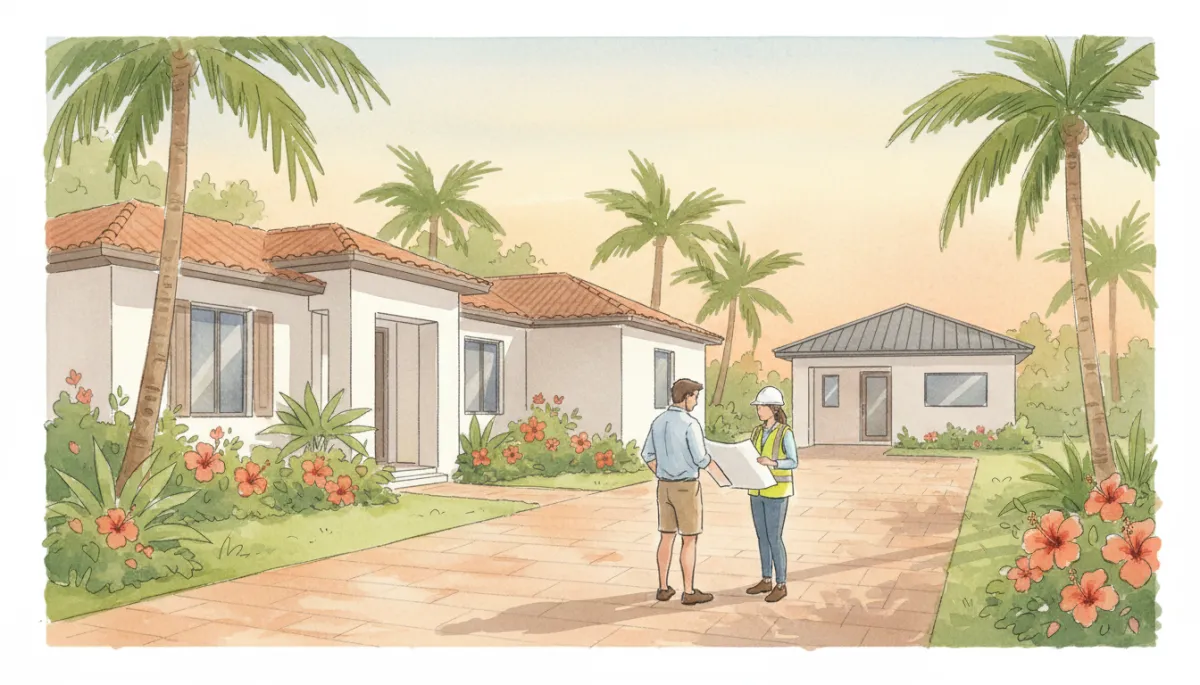
A clear zoning check and permit strategy can shave months off your ADU timeline.
Real‑World Success Story: “They Told Me No in 2021. We Broke Ground in 90 Days.”
When we talk about “ADU law changes,” it can sound abstract—until you meet someone whose life changed because the rules did. One of our recent clients in Central Florida, we’ll call her Maria, is a perfect example.
In 2021, Maria visited her local building department with a simple idea: convert part of her deep backyard into a small cottage for her aging mother, and eventually use it as a rental. She left with a firm “No.” Her zoning allowed only one dwelling unit, the city required extra parking she couldn’t provide, and staff warned her impact fees would be “similar to a new house” even if she got special approval.
Fast forward to late 2024. Maria heard on local news that Florida had passed a statewide ADU reform bill and that her city was updating its code. She searched “Florida ADU laws 2025” and found LK Homes. Our team walked her through the new rules for her specific parcel:
Her single‑family zoning now explicitly allowed one detached ADU as of right.
A 640‑square‑foot cottage fit within setbacks and fell under the 750‑square‑foot threshold, eliminating additional parking requirements.
Impact fees were now 50% lower than before the reform, saving her thousands of dollars.
From signed design agreement to approved permit took just under 45 days. Site work began roughly two weeks after that. In other words, Maria went from “It’s not allowed” to breaking ground in about 90 days—because the laws changed and because she worked with a builder who knew how to apply them.
Builder’s Perspective: Why This Is the Best Window Florida Homeowners Have Had
Speaking as a Florida new‑construction specialist, this is the most favorable environment I’ve ever seen for homeowners who want to add an ADU. Not perfect—some local codes still lag—but better than any time in the last decade.
Legislation is finally on your side. The 2024 reforms put real teeth behind timelines and fee reductions. We’re no longer fighting uphill on every project; we’re working with a system that expects ADUs to be part of the solution.
Demand isn’t slowing down. With 467,000 new residents a year, rental demand and multi‑generational living needs are only increasing. That supports both short‑term cash flow and long‑term resale value for ADU‑equipped properties.
Waiting costs money. Construction costs, labor, and materials have a long‑term history of trending up. Every year you delay, you risk paying more to build the same square footage while missing out on rent or family housing flexibility in the meantime.
From a builder’s point of view, the combination of friendlier laws, strong demand, and clear timelines makes 2025 a rare alignment. It’s not about hype—it’s about recognizing that policy, pricing, and population trends are all pointing in the same direction, and that doesn’t happen often.
Using the New Florida ADU Laws to Your Advantage: Practical Tips
With the right strategy, the 2024–2025 ADU law changes can work in your favor instead of adding more red tape. Here’s how to move faster and smarter than ever before.
1. Start With a Clear Goal for Your ADU
Long‑term rental: Focus on durable finishes, a functional 1‑ or 2‑bedroom layout, and separate access and parking where required.
Family housing: Prioritize accessibility (single‑story, no‑step entries, wider doors) and proximity to the main house for caregiving.
Future flexibility: Design a layout that can transition from family use to rental later with minimal changes.
2. Optimize Size for Fees, Parking, and Demand
Staying under 750 square feet can unlock:
Reduced or eliminated parking requirements, which is critical on tight lots.
Lower impact fees thanks to the 50% reduction under the 2024 reform.
At LK Homes, many of our ADU designs in the 550–750 square foot range rent competitively while keeping build and fee costs under control—an important balance in today’s market.
3. Tap Local Incentives, Especially for Affordable Units
Some counties are layering local incentives on top of state reforms. For example, Alachua County offers support through the State Housing Initiatives Partnership (SHIP) program for certain ADU projects tied to affordable housing goals. These programs can help offset costs or improve your financing options if you commit to renting at more affordable rates.
4. Work With a Builder Who Lives in the Code, Not Just the Plans
ADU projects live or die on details: a two‑foot setback miss, a misinterpreted parking standard, a missing line on a site plan. LK Homes positions itself as the Florida ADU builder who stays current on legislation so you don’t have to. Our team tracks county‑by‑county ordinance changes, monitors bills like the 2024 ADU Reform Bill and subsequent proposals, and designs to today’s rules—not last year’s.
💡 Pro Tip: When you interview builders, ask them to explain how the 45‑day permit cap and 50% impact fee reduction apply in your jurisdiction. If they can’t answer clearly, they may not be the right partner for an ADU in 2025.
What’s Next: ADU Reform Discussions for 2025 and Beyond
The 2024 reforms were a major step, but they’re not the end of the story. Lawmakers have already floated additional changes aimed at making ADUs even more accessible statewide. Some proposals—like SB 184 and its House companions—have sought to require local governments to allow ADUs in all single‑family zones and to further restrict parking and occupancy barriers. Others have explored property tax incentives for ADUs used as affordable housing, though not all of these bills have passed.
As of 2025, the key point is this: the direction of travel is clear. Florida policymakers increasingly see ADUs as a core tool for addressing housing shortages, especially for seniors, workforce renters, and multi‑generational families. That makes it unlikely that ADU rules will tighten in the near term—and very likely that they’ll continue to open up.
Thought Leadership: A Once‑in‑a‑Generation Chance to Build Wealth on Land You Already Own
Not every policy shift creates a real wealth‑building window. This one does. When you combine:
Florida’s second‑in‑the‑nation ADU permit volume,
sustained population growth of hundreds of thousands of new residents per year,
proven 23–28% property value premiums for homes with ADUs,
and a legal environment that finally expects ADUs instead of resisting them,
you get a moment that doesn’t come around often. Adding an ADU in 2025 is not just about solving a housing need today; it’s about locking in an income‑producing asset on land you already own, in a state where housing will remain in demand for decades.
As a builder, we see ADUs as one of the most practical, scalable ways for everyday Floridians—not just institutional investors—to participate in the upside of the state’s growth. You don’t have to buy another property. You don’t have to speculate on a distant market. You can build a modest, efficient home in your own backyard and let Florida’s housing demand work for you.
Why Partner With LK Homes for Your Florida ADU
LK Homes is a Florida‑based new construction specialist dedicated to “Building Dreams Within Reach.” For ADU clients, that means we don’t just draw pretty plans—we guide you from first zoning question to final inspection, with a sharp focus on today’s laws and tomorrow’s value.
Legislation‑aware design: We actively track Florida’s ADU law changes, including the 2024 reform bill and emerging 2025 proposals, so your project is aligned with the latest rules from day one.
County‑specific expertise: Because ADU rules are set county by county, we tailor every feasibility review and design package to your jurisdiction’s current ordinance, not a generic statewide template.
Streamlined permitting: Our plans and documentation are built to support the 45‑day permit processing cap, reducing back‑and‑forth and helping your ADU move through the system as quickly as the law allows.
If you’ve been told “no” in the past, or if you’re simply unsure what the new rules mean for your property, we’re here to give you clear answers—and a realistic path forward.
Florida ADU Laws 2025: Frequently Asked Questions
1. Can I build an ADU in Florida in 2025?
In many cases, yes—but it depends on your specific property and local zoning. The 2024 ADU reform bill set a friendlier statewide baseline (faster permits, lower fees, fewer parking barriers), but each county and city still decides exactly where and how ADUs are allowed. The fastest way to know is to combine a zoning lookup with a feasibility review from an ADU‑experienced builder like LK Homes.
2. How long will it take to get my ADU permit approved?
Under the 2024 reforms, complete ADU permit applications are subject to a 45‑day processing cap. That doesn’t mean every project is approved in 45 days—jurisdictions can still ask for corrections—but it does mean the era of open‑ended review is over. With a complete, code‑aligned submittal, many of our clients see approvals within that 45‑day window.
3. How much will impact fees cost for an ADU now?
The 2024 ADU Reform Bill reduced ADU impact fees by roughly 50% compared with pre‑reform levels, but exact amounts still vary by jurisdiction and utility provider. Smaller ADUs, especially those under 750 square feet, tend to benefit the most from lower fees and reduced parking requirements. LK Homes can provide a project‑specific estimate once we know your location and target unit size.
4. Do I have to live on the property if I build an ADU?
Historically, many Florida jurisdictions required the property owner to live in either the main house or the ADU. The 2024 reforms significantly reduced owner‑occupancy requirements at the state level, and many local codes have followed suit. However, details still vary by county and city. It’s important to confirm your local ordinance or have a builder review it for you if you plan to rent both units.
5. Where can I find official information about Florida’s ADU laws and housing programs?
For statewide programs and affordable housing incentives, the Florida Housing Finance Corporation’s SHIP program is a good starting point. For legislative details, you can review the official text of the 2024 ADU Reform Bill on the Florida Senate’s website and housing data from the Florida Department of Economic Opportunity. For property‑specific answers, a consultation with LK Homes can bridge the gap between legal language and buildable plans.
Ready to See What You Can Build? Schedule a Free ADU Consultation
If you own property in Florida and you’re wondering whether the new ADU laws finally make your project possible, now is the time to get clear answers. LK Homes offers a free, no‑obligation ADU consultation where we:
Review your zoning and lot conditions,
Explain how the 2024–2025 law changes apply to your property,
Outline realistic size, layout, and budget options for your ADU,
And map out the steps from first concept to permit in under 45 days when possible.
The laws have changed. The demand is here. The opportunity is real. Schedule your free consultation with LK Homes today and find out what an ADU could mean for your family, your income, and your long‑term wealth—on the land you already own.
