Why LK Homes Uses SuperForm ICF in Florida
ICF Construction, SuperForm ICF Florida, ICF Home Builder Florida SuperForm
Why LK Homes Builds With SuperForm ICF Blocks
LK Homes builds exclusively with SuperForm ICF blocks for one reason — your home’s performance, comfort, and longevity matter more than shaving a few dollars off material costs. If you are considering an ICF home in Florida, the block brand your builder chooses is not a small detail, it is a long-term decision you will live with every day.
The ICF Market Is Growing — But Not All Blocks Are Equal
Across North America, insulated concrete forms are moving from niche to mainstream. Industry research shows the global ICF market is projected to reach well over USD 1.5 billion over the next decade, with steady annual growth driven by energy efficiency, disaster resilience, and stricter building codes. Residential projects — especially custom homes — account for the largest share of this demand, as families look for structures that can handle extreme weather and rising utility costs.
With that growth has come a flood of new ICF block brands. Some are excellent, engineered for strength and long-term performance. Others are lighter, cheaper, and designed to win bids on price rather than to protect real families in hurricane-prone regions like Florida. Foam density, web design, tie spacing, and manufacturing quality now vary widely from one manufacturer to another. On paper, they all look similar — hollow foam forms filled with concrete. In practice, the differences show up in wall strength, energy performance, and how the home feels and performs decades later.
📌 Key Takeaway: The ICF label alone is not a guarantee of quality — the specific block system and manufacturer your builder chooses will determine how well your home actually performs.
What SuperForm ICF Is — And How It Is Manufactured
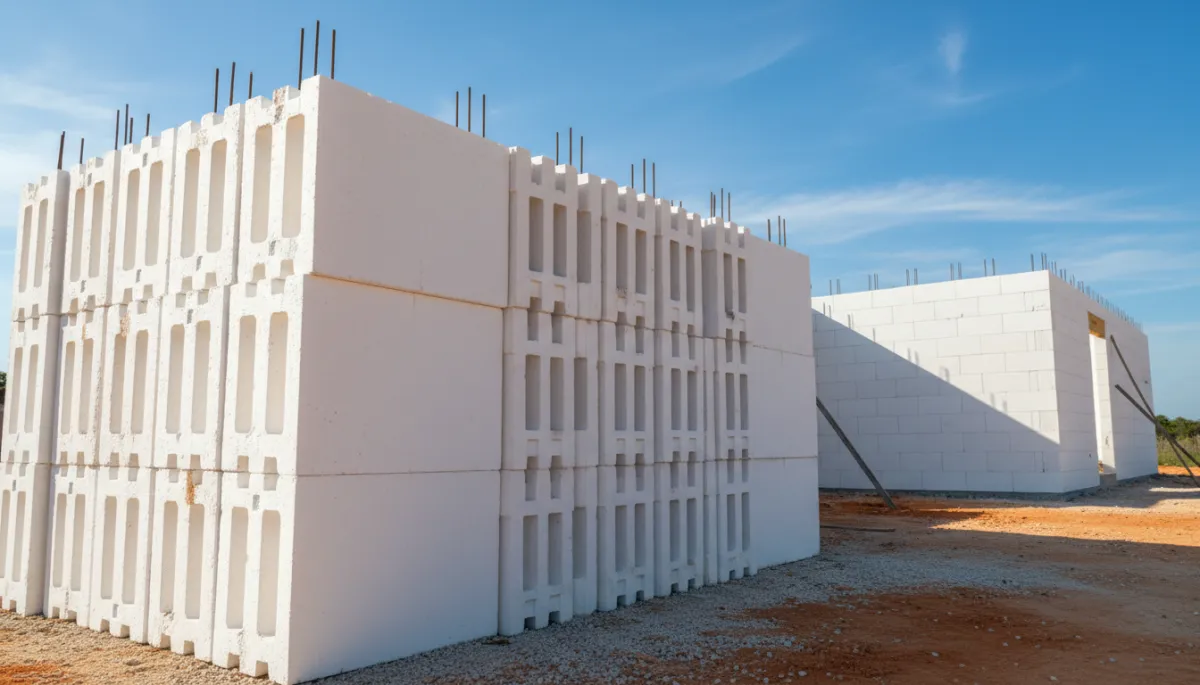
SuperForm ICF is a high-performance insulated concrete form system made from expanded polystyrene (EPS) foam panels connected by robust polypropylene webs. On site, these blocks stack like oversized, precision-made building blocks. Once reinforced with rebar, they are filled with concrete to create a continuous, steel-reinforced concrete wall wrapped in insulation on both sides. The result is a structure that combines the mass and strength of concrete with the thermal performance of a high-end insulation system.
In manufacturing, SuperForm uses high-density EPS foam and virgin polypropylene for its ties, rather than cheaper recycled blends. The blocks feature a 12-inch-tall profile with ties every 6 inches, and interlocking knobs that create a tight friction fit between courses. Grooved panels, anti-lift features, and repeating cut lines are built into every block, which improves accuracy, reduces waste, and keeps walls straight during concrete placement. According to SuperForm’s published data, this design contributes to one of the strongest ICF systems available, with ties rated over 850 pounds of tensile strength and walls capable of handling extreme wind loads when properly engineered and installed.
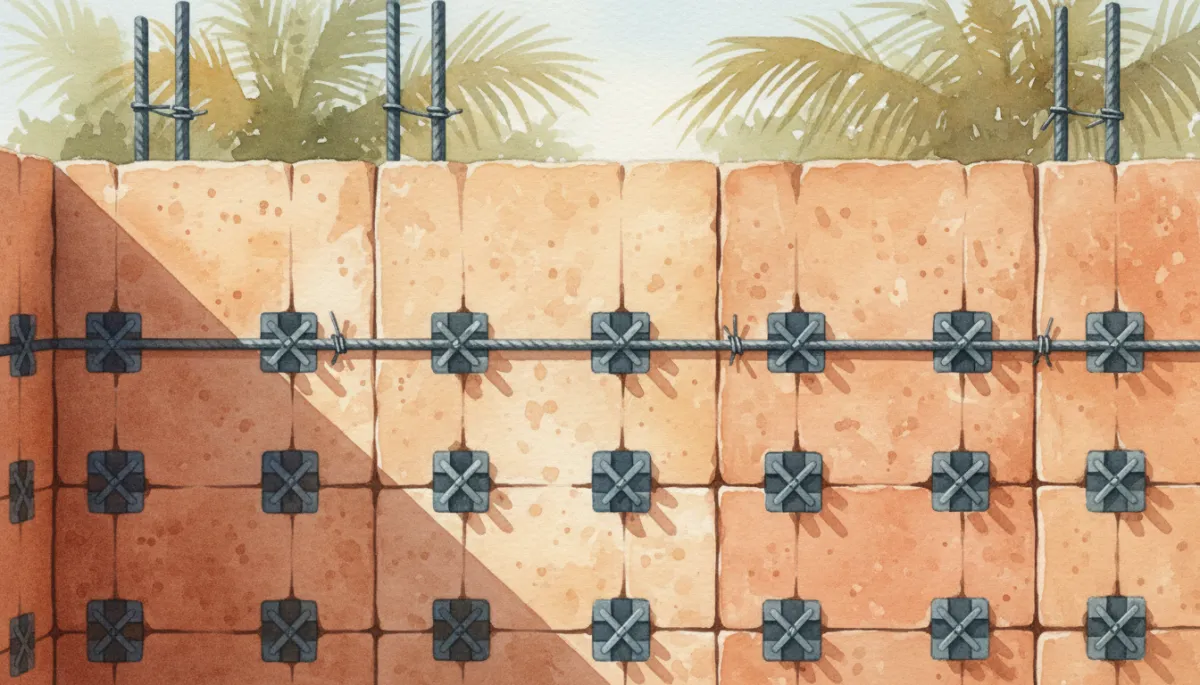
Stronger blocks and dense tie spacing help LK Homes deliver straighter, more resilient ICF walls.
How SuperForm Differs From Other ICF Block Systems
Florida homeowners often ask whether all ICF blocks are basically the same. They are not. Leading brands such as Nudura, Fox Blocks, Amvic, BuildBlock, and others each bring different design choices to the table — from block size and tie spacing to foam density and fastening strips. SuperForm distinguishes itself in several key ways that matter for homes in our climate and code environment.
Stronger block integrity. SuperForm blocks are engineered to resist blowouts and deformation during concrete placement. The combination of dense tie spacing, robust interlocks, and high-density foam creates a form that stays true, even under heavy loads. For a builder, that means fewer delays and rework. For a homeowner, it means straighter walls and consistent concrete coverage where you need it most.
Continuous insulation on both sides. SuperForm provides EPS insulation inside and out, with no breaks at the studs or plates you find in wood framing. This continuous wrap eliminates thermal bridging — the heat transfer that occurs through wood or steel elements in conventional walls — and helps your home maintain a stable indoor temperature year-round.
Superior R-value and real-world energy savings. Independent testing, including a CLEB Laboratories thermal study, shows that SuperForm ICF walls deliver 58% better R-value performance than a typical wood-framed wall assembly. SuperForm reports that this translates into up to 60% annual energy savings for homeowners compared to conventional construction — a major advantage in Florida’s cooling-dominated climate where air conditioning runs much of the year.
Reduced air leakage and moisture risk. Because SuperForm integrates formwork, insulation, and a continuous air barrier into one system, it largely eliminates the gaps, voids, and penetrations that are common in wood framing and batt insulation. Fewer air leaks mean less humidity migrating into wall cavities, less chance of condensation, and a more comfortable, quieter home.
Other ICF brands can perform well when designed and installed correctly, but block density, foam quality, and web design vary significantly. Thinner ties, wider spacing, or softer foam may lower manufacturing cost, yet they also increase the risk of bulging walls, inconsistent concrete coverage, and reduced structural performance. SuperForm’s engineering choices favor strength and reliability over shaving pennies off production.
Why LK Homes Chose SuperForm — A Builder’s Perspective
At LK Homes, “Building Dreams Within Reach” is more than a tagline — it is a promise that every detail of your new home, from the slab to the roof, is chosen with long-term value in mind. When we committed to becoming an ICF home builder in Florida, we did not start with price sheets, we started with performance data and field experience.
We evaluated multiple ICF block brands side by side. We looked at foam density, tie design, block strength, and how each system behaved during actual pours. We studied independent testing — including the CLEB Laboratories thermal study comparing ICF to wood framing — and we reviewed SuperForm’s own published data on R-values, thermal mass, and energy savings. We spoke with builders in hurricane and tornado zones, and we paid attention to which systems were being used by organizations that cannot afford to cut corners, such as Habitat for Humanity and other high-accountability builders.
Our conclusion was clear — SuperForm ICF offered the best combination of block integrity, thermal performance, and long-term reliability. We chose SuperForm based on how it performs in the field and in the lab, not on which manufacturer could offer the lowest upfront cost. That decision shapes every project we take on. When you build with LK Homes, you are not just getting an “ICF house,” you are getting a SuperForm ICF home designed and built for Florida’s climate and code requirements.
💡 Pro Tip: Ask any ICF builder which block they use and why. If the answer starts and ends with price or availability, keep asking questions until you understand how that choice affects your home.
What SuperForm ICF Means For Your Florida Home’s Performance
For landowners, families, and businesses planning a new home or small commercial building, the advantages of SuperForm ICF are practical and measurable. You are not buying a theory — you are investing in day-to-day comfort and long-term savings.
Energy efficiency you can feel. With 58% better R-value performance than conventional wood-framed walls and up to 60% annual energy savings, SuperForm ICF helps keep cooling costs under control. The concrete core’s thermal mass reduces temperature swings, which means fewer hot and cold spots and less strain on your HVAC system in Florida’s heat and humidity.
Storm-ready strength. SuperForm ICF walls combine reinforced concrete with a protective foam shell, delivering exceptional resistance to high winds and flying debris when engineered correctly. For coastal and inland Florida properties alike, that level of resilience is not a luxury — it is a practical way to protect your investment and your family during hurricane season.
Quieter, healthier interiors. The continuous EPS insulation and solid concrete core dramatically reduce outside noise — a benefit if your lot is near a busy road or growing subdivision. The reduced air leakage and minimized insulation voids also help control moisture and reduce the risk of mold inside wall cavities, a common concern in humid climates.
Low maintenance over decades. Concrete and EPS do not rot, warp, or attract termites the way wood can. With SuperForm ICF, the structure behind your finishes is designed for generations, not just code minimums. That durability supports lower long-term maintenance costs and a more predictable ownership experience.
A Florida Homeowner’s Story — Learning Why The Block Brand Matters
When Mark and Elena purchased their lot on Florida’s Gulf Coast, they knew they wanted an ICF home. They had read about concrete walls, better insulation, and storm resistance. What they did not know — and what they told us at our first meeting — was that they “didn’t really care which block brand” we used, as long as it was ICF and met code.
During design, we explained that LK Homes builds exclusively with SuperForm ICF. We walked them through the differences in foam density, tie design, and R-value compared to lower-cost alternatives. We showed them third-party data from SuperForm and the CLEB Laboratories study, and we explained how continuous EPS insulation on both sides of the wall eliminates thermal bridging entirely — something no wood frame wall can do. At the time, they appreciated the explanation but admitted it still felt like a technical detail rather than a day-to-day concern.
Their perspective changed after move-in. By their first full summer in the home, they noticed two things. First, their power bills were significantly lower than neighbors in similar-sized, code-built, wood-framed homes. Second, during afternoon storms and a late-season tropical system, the house felt solid, quiet, and stable. The walls did not vibrate, outside noise was muted, and the interior temperature barely moved, even when the power flickered. When they visited friends in a conventional home after a storm, the difference in noise and comfort was obvious.
Months later, Mark told us, “At the start, I just wanted ‘an ICF house.’ Now I understand why the block itself matters. Knowing you chose SuperForm for its performance — not just because it was on sale — makes me feel like we made the right call for our family.” That is exactly the experience we aim for with every LK Homes client.
Material Selection Is A Values Statement — Not Just A Line Item
In today’s construction market, where ICF adoption is rising and cheaper competing products are entering the field, material selection has become a clear values statement. As a builder, you either choose the best block system you can justify — or you choose the one that helps you win bids on cost alone. There is no neutral position. Every decision either moves you toward long-term quality or toward short-term savings.
LK Homes aligns with organizations like Habitat for Humanity and other high-accountability builders who use SuperForm because they cannot afford to cut corners. When you are responsible for safe, efficient housing and you answer to donors, boards, or long-term performance metrics, block integrity and proven data matter more than minor cost differences. We bring that same mindset to every custom home we build in Florida. Your project may be a single residence, but we treat it with the same seriousness as a mission-critical facility.
📌 Builder’s View: Choosing SuperForm ICF is our way of saying we take your finished home — and how it performs 10, 20, or 30 years from now — personally.
Questions To Ask Any ICF Builder About Their Block System
Whether you build with LK Homes or another contractor, you deserve clear answers about the specific ICF system going into your walls. Here are practical questions to ask — and why they matter for your Florida project:
“Which ICF brand do you use, and why?” Look for an answer that references block strength, foam density, web design, and performance data — not just price, local stocking, or habit. A thoughtful response shows the builder has evaluated options, not simply taken what was available.
“What is the effective R-value and expected energy savings?” Ask for numbers and sources. SuperForm ICF, for example, reports 58% better R-value performance than typical wood-framed walls and up to 60% annual energy savings. If a builder cannot explain how their chosen system performs thermally, it is harder to trust their energy-efficiency promises.
“How does this block handle thermal bridging and air leakage?” You want continuous insulation on both sides of the concrete and a tight interlocking system that minimizes gaps. SuperForm’s continuous EPS eliminates thermal bridging entirely — a standard you can use to compare other options.
“Who else builds with this system?” If the block is used by high-accountability organizations, major commercial projects, or builders with strong reputations in harsh climates, that is a positive sign. If it is mostly used in low-cost builds where price is the selling point, proceed carefully.
“How does this system perform in hurricanes and high-wind events?” Ask for engineering data, code approvals, and real-world examples. In Florida, resilience is not optional. Your builder should be able to explain how their chosen ICF system is designed and detailed to handle local wind loads and impact conditions.
💡 Pro Tip: Take notes on each builder’s answers. The clarity and confidence with which they explain their ICF system often reveals more than the brand name alone.
LK Homes + SuperForm ICF — A Practical Path To A Better Florida Home
For Florida landowners, families, and businesses, the decision to build with ICF already puts you ahead of the curve. You are choosing a structure that is more durable, more efficient, and more comfortable than a typical wood-framed home. The next step is making sure the specific block system — and the builder behind it — live up to that potential.
LK Homes partners with SuperForm ICF because the data, field performance, and long-term reliability align with our commitment to quality. SuperForm’s stronger blocks help us maximize your budget and our time on site, reducing waste and rework. Its continuous EPS insulation and high effective R-value support substantial energy savings and year-round comfort. And its track record with respected builders and organizations confirms what we see in our own projects — this is a system built for serious, long-lasting construction, not just for marketing claims.
When you build with LK Homes, you are not expected to become an expert in foam densities, tie spacing, or thermal mass. That is our work. Your role is to define your goals — budget, timeline, lifestyle, and long-term plans — and let us guide you through a construction approach that supports those goals. Choosing SuperForm ICF is one of the clearest ways we can demonstrate that we take your finished home seriously, from the inside out.
FAQ: SuperForm ICF Blocks And LK Homes In Florida
1. What makes SuperForm ICF a good fit for Florida homes?
SuperForm ICF combines reinforced concrete strength with continuous EPS insulation on both sides of the wall. That means better hurricane resistance, quieter interiors, and significantly improved energy performance compared to wood framing. The system’s ability to eliminate thermal bridging and reduce air leakage is especially valuable in Florida’s hot, humid climate, where cooling costs and moisture control are major concerns.
2. How much energy can I actually save with a SuperForm ICF home?
SuperForm reports that its ICF walls deliver 58% better R-value performance than conventional wood-framed wall systems and can provide up to 60% annual energy savings, depending on design and usage. While every home is different, LK Homes clients consistently see lower cooling loads and more stable indoor temperatures than neighbors in comparable wood-framed houses.
3. Is building with SuperForm ICF more expensive than wood framing?
Upfront, an ICF structure typically costs more than a basic wood-framed shell. However, SuperForm’s stronger block design helps LK Homes maximize labor efficiency and reduce waste, which offsets part of that premium. When you factor in lower energy bills, reduced maintenance, and improved durability over the life of the home, many clients find that SuperForm ICF offers better overall value than conventional construction.
4. Why does LK Homes build exclusively with SuperForm instead of offering multiple ICF brands?
We believe specialization leads to better outcomes. By standardizing on SuperForm ICF, our team can refine details, streamline installation, and stand behind a system we know inside and out. We chose SuperForm based on block integrity, performance data, and long-term reliability — not price — and we see that decision pay off in the quality and consistency of the homes we deliver.
5. How do I get started planning a SuperForm ICF home with LK Homes?
The best first step is a conversation. Share your lot details, budget, and goals, and we will walk you through how SuperForm ICF fits into your project — from floor plan and elevation options to energy performance targets and financing considerations. We will also answer any technical questions you have about ICF construction so you can move forward with clarity and confidence.
Ready To Explore A SuperForm ICF Home In Florida?
If you are considering an ICF home and want a builder who has done the homework for you, LK Homes is here to help. We combine SuperForm ICF blocks with practical, Florida-focused design to deliver durable, efficient homes that keep your dream within reach.
Schedule a free consultation to discuss your land, your plans, and how a SuperForm ICF home can serve your family or business for decades to come.
