New Home Construction Process in Florida
Home Building, Florida Construction, New Home Construction Process Florida
What to Expect During the New Home Construction Process in Florida
If you are about to build a new home in Florida, you are likely excited, a little nervous, and full of questions about what actually happens between signing your contract and receiving your keys. At LK Homes, “Building Dreams Within Reach” means giving you a clear, step‑by‑step picture of the new home construction process in Florida so you feel informed, prepared, and confident from day one.
The Big Picture: How Long Does New Home Construction Take in Florida?
Before we walk through the phases, it helps to anchor your expectations around timing. In Florida, a typical new home construction process runs 8–14 months from permit issuance to certificate of occupancy. Your exact custom home construction timeline in Florida depends on your home’s size, design complexity, weather, material availability, and how quickly decisions are made along the way.
The good news: Florida’s permitting environment has improved. As of 2025, statewide reforms have helped many counties move to a median of about 25 days to process complete residential building permits, giving you a faster and more predictable start than in years past. Clearer review deadlines and streamlined procedures mean the early phases of your build move more quickly than many online articles written years ago might suggest. (Florida Building Code)
📌 Key Takeaway: Think of your new home construction process in Florida as a series of predictable phases. When you understand what happens in each phase, surprises go down and confidence goes up.
Phase 1: Contract, Pre‑Construction, and Your First Schedule
The process truly begins the day you sign your construction contract. This is where expectations, responsibilities, and the financial framework are clearly defined. At LK Homes, we treat this as more than paperwork; it is the moment we become partners in your build.
During pre‑construction, we:
Confirm your homesite details, surveys, and any HOA or architectural review requirements.
Finalize structural options (such as choosing an ICF wall system versus traditional wood framing).
Review your allowances and specifications so you understand what is included and where you can personalize.
Critically, LK Homes provides a detailed, phase‑by‑phase construction schedule before we ever break ground. This schedule explains the major milestones, expected durations, and when we will need decisions from you. You also meet your single point of contact, the person you will communicate with from contract to keys so you never feel like you are chasing updates from a faceless team.
Phase 2: Design Finalization – Locking in the Details Early
The design finalization phase is where your home moves from idea to a complete, buildable set of plans. For Florida homeowners, this step also ensures your home meets or exceeds the Florida Building Code for wind loads, flood zones, and energy efficiency (Florida Building Code official site).
Together, we will:
Finalize your floor plan, structural options, and exterior elevations.
Make most of your design selections: cabinets, countertops, flooring, plumbing fixtures, exterior colors, and more.
Confirm whether your home will use ICF (Insulated Concrete Forms) or conventional framing and how that affects energy performance and insurance.
💡 Pro Tip: One of the eight best things you can do to keep your home building phases in Florida on track is to make all major design decisions before breaking ground. Mid‑build change orders are the single biggest client‑driven cause of delays and cost overruns. When your decisions are locked in early, your construction timeline and budget become far more predictable.
Phase 3: Permitting – Faster, Clearer, and More Predictable in 2025+
Once your plans are complete, LK Homes submits them for permitting. This includes building permits and, when necessary, zoning, environmental, and utility approvals. Historically, this step could feel like a black hole for homeowners, but Florida’s 2025 permitting reforms have significantly improved clarity and speed. Many counties now operate with firm review deadlines and digital submittals, contributing to that median 25‑day permit processing time for complete residential applications.
While local workloads still vary, you can expect:
LK Homes to handle all permit paperwork and respond to any plan review comments from the county or city.
Regular updates from your single point of contact so you always know where your permit stands.
Builder’s Perspective: In my experience, homeowner anxiety during permitting almost always comes from silence. That is why at LK Homes, we treat proactive communication as non‑negotiable. Even if the update is simply “We are still in the county review queue and on track,” you deserve to hear it.
Phase 4: Site Clearing and Preparation – Turning Land into a Homesite
Once your permit is issued, visible progress begins. Site preparation is where your lot becomes a true homesite. For Florida builds, this phase is especially important because of our soil conditions, drainage needs, and potential floodplain considerations.
Trees, brush, and debris are cleared according to the plan and any environmental restrictions.
The homesite is graded to manage water away from the foundation and neighboring properties.
Temporary utilities, construction driveway, and erosion controls are installed.
This is a great time for you to visit the site, walk the footprint, and start visualizing room locations and views. Your LK Homes contact will often share photos or short videos so you can see the transformation even if you cannot be there in person.
Phase 5: Foundation – The Slab That Supports Everything
Most Florida homes are built on a concrete slab foundation due to our high water table. During this phase, we:
Form and compact the foundation area, install plumbing rough‑ins, and place reinforcing steel per engineering.
Schedule and pass required inspections before pouring concrete, ensuring compliance with the Florida Building Code.
Once the slab is poured and cured, you will be able to walk the outline of your rooms and truly feel the scale of your new home for the first time. Your construction schedule will show you exactly how long this phase is expected to take and when the next steps begin.
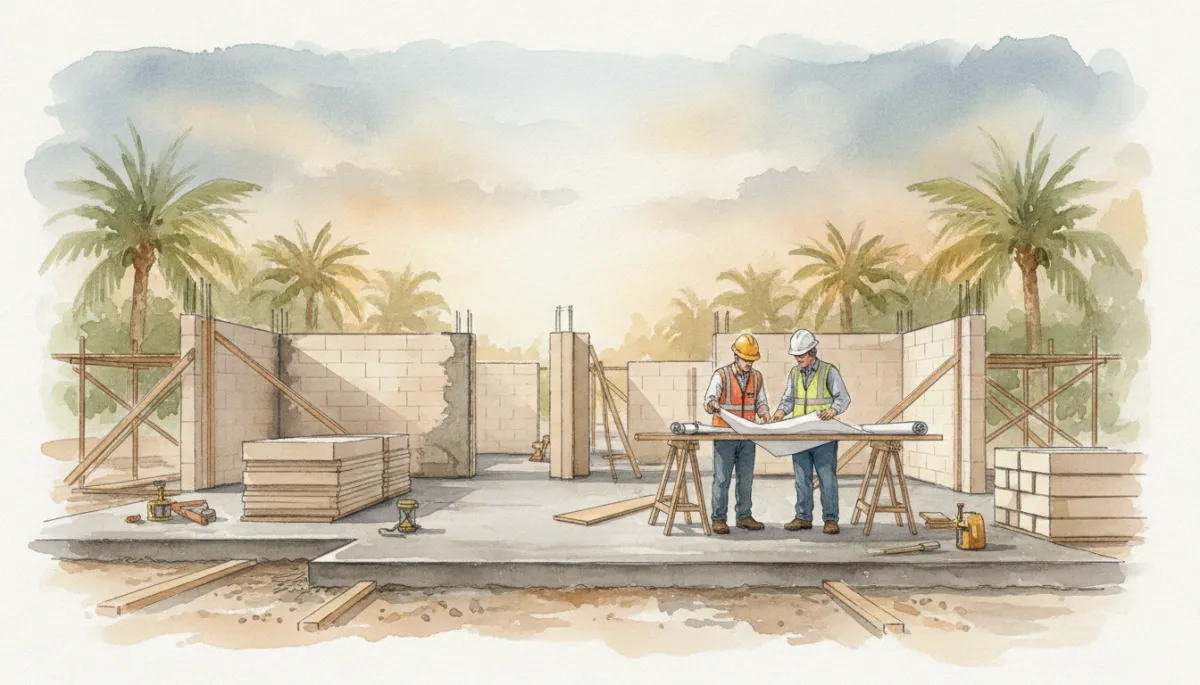
ICF wall systems speed up framing, reduce inspections, and boost storm resilience for Florida homes.
Phase 6: Framing or ICF Wall System – Watching Your Home Take Shape
The framing phase is where your home quickly rises from the slab. With traditional wood framing, this involves building the skeleton of walls, floors, and roof structures. With an ICF wall system, the process looks different—and offers some clear advantages for Florida’s climate and storm risk.
ICF walls are built by stacking insulated forms, placing reinforcing steel inside, and then filling them with concrete. For you as a homeowner, this means:
Walls go up faster than many traditional framing packages, especially on straightforward floor plans.
Fewer framing inspections compared to wood frame, because many structural checks happen at once before concrete is poured.
Superior hurricane resistance, energy efficiency, sound control, and potential insurance benefits—ideal for Florida’s environment.
Whether you choose ICF or traditional framing, LK Homes will keep you updated with photos, videos, and notes as your home’s shape, rooflines, and interior spaces become clear. This is also when mid‑build change orders are most tempting—moving walls, shifting windows, or adding features. Remember: mid‑build change orders are the number one client‑driven cause of delays and overruns. Decisions made early protect your timeline now.
Phase 7: Roofing – Drying In and Protecting Your Investment
In Florida, your roof is a critical defense against sun, rain, and hurricanes. During the roofing phase, we install underlayment, flashing, and your chosen roofing material—shingles, tile, or metal—according to Florida Building Code wind and uplift standards. Once your home is “dried in,” interior work can begin in earnest without weather delays affecting every step.
Phase 8: Mechanical Rough‑Ins – Plumbing, Electrical, and HVAC Behind the Walls
With structure and roof in place, licensed trades install the systems that make your home livable:
Plumbing rough‑in: Pipes for water supply, drains, and venting are run through walls and slabs to future fixtures.
Electrical rough‑in: Wiring, outlets, switches, and panel locations are installed based on your lighting and power plan.
HVAC rough‑in: Ductwork, returns, and equipment locations are set to keep your home comfortable in Florida’s heat and humidity.
You will have opportunities before and during this phase to confirm outlet locations, lighting placements, and any special wiring (for example, EV chargers or whole‑home surge protection). Your LK Homes contact will remind you of these decision points so nothing important is missed.
Phase 9: Insulation, Drywall, and the First Real “Home” Feel
After mechanical inspections are passed, we install insulation appropriate for your home’s design and code requirements. In ICF homes, the wall insulation is built into the system, so additional focus goes to roof and attic performance. Then drywall is hung, taped, and finished. At this point, rooms feel like rooms, not just a maze of studs and wires. Many clients say this is when the project becomes emotionally real in the best way.
Phase 10: Interior Finishes – Where Your Style Comes to Life
With walls finished, we move into what most homeowners think of when they picture “design”:
Cabinets, countertops, and backsplashes are installed in kitchens and baths.
Interior doors, trim, and baseboards go in, followed by paint.
Flooring is installed, typically after most painting to protect your investment.
Because we encouraged you to make these selections early, this phase is usually about execution rather than last‑minute decisions. You will receive regular photo updates and invitations for milestone walkthroughs so you can see your vision coming together and catch any small adjustments while they are still easy to address.
Phase 11: Exterior Finishes – Curb Appeal and Florida‑Friendly Details
Outside, we complete stucco or siding, exterior paint, driveways, walkways, porches, and landscaping. For Florida homes, we pay special attention to drainage, irrigation, and materials that hold up well in sun, humidity, and occasional storms. This is when your home starts to look finished from the street, even if interior details are still being polished.
Phase 12: Final Inspections and Certificate of Occupancy – Officially Approved to Live In
As your home nears completion, the local building department conducts a series of final inspections: structural, electrical, plumbing, mechanical, and life‑safety items like smoke detectors and egress. Passing these inspections leads to your certificate of occupancy (CO), which is issued by the county or city and is required before you can legally move in.
Your LK Homes team coordinates all inspections and keeps you updated on scheduling and results. We also explain what each inspection means so you are not left wondering why someone is there and what they are looking for. Clear communication here turns what could be a stressful waiting period into a straightforward checklist we work through together.
💡 Pro Tip: One of your eight best practices is to understand what each inspection means. You do not need to be an expert, but a simple overview from your builder helps you feel in control instead of in the dark.
Phase 13: Punch List and Final Walkthrough – Your Chance to Fine‑Tune Before Move‑In
Even in a carefully managed build, small items will need attention at the end: paint touch‑ups, a sticky door, a cabinet adjustment. That is what the punch list phase is for. This is your opportunity to document and resolve any remaining items before accepting the home.
LK Homes conducts an internal quality walk, then invites you to a final walkthrough before closing. During this walkthrough, we move room by room, noting anything that needs adjustment. This is your last formal chance before closing to identify and document unresolved items, and we take it seriously. We encourage you to bring a notepad or use a simple decision and observation log so you feel organized and heard.
💡 Pro Tip: Preparing for the punch list process—mentally and practically—is one of the eight best ways to make your build smoother. Expect a few minor items; that is normal. The key is having a builder who documents them clearly and resolves them promptly.
Phase 14: Keys, Move‑In, and Life in Your New Florida Home
With your certificate of occupancy in hand, punch list items addressed or scheduled, and closing complete, it is time for the moment you have been waiting for: receiving your keys. We recommend planning your move‑in date conservatively—build in a little buffer after your anticipated CO date to account for weather, inspection schedules, and final details. You will appreciate the breathing room when the time comes to coordinate movers, utilities, and furniture deliveries.
A Real‑World Story: From Anxious First‑Time Builder to Confident Homeowner
When Sarah and Miguel, a young family from Central Florida, came to LK Homes, they had never built a home before. They had heard horror stories: builders who disappeared for weeks, surprise costs, and projects that dragged on for years. They were excited about their dream home but anxious about what to expect building a home in Florida at each phase.
From day one, we walked them through the exact step‑by‑step new home construction process in Florida—from contract and permitting to ICF walls, inspections, and punch list. They received a detailed construction schedule, were introduced to their dedicated point of contact, and were set up on our communication platform that shared weekly photos, notes, and upcoming decisions. When permitting moved faster than they expected thanks to the improved 2025 timelines, they knew about it in real time rather than being surprised by a sudden “We are starting tomorrow” phone call.
Throughout framing, mechanical rough‑ins, and finishes, Sarah and Miguel visited the site regularly but respected the schedule, communicated through their designated contact, and kept a simple decision log we had provided. By the time they reached final inspections and their punch list, they felt in control, not overwhelmed. At closing, Sarah told us, “We always knew what was happening next. There was never a moment where we felt like the house was being built to us instead of with us.”
How Technology and Communication Are Raising the Bar in Florida Home Building
Across Florida, builder communication technology—secure client portals, shared photo libraries, messaging tools, and digital schedules—is changing what homeowners reasonably expect during a build. You no longer have to accept vague updates or unanswered voicemails. At LK Homes, we embrace these tools because they support what we already believe: clarity is part of the craft.
Builder’s Opinion: After years in this industry, I can say with confidence that homeowner anxiety almost always tracks with a lack of communication, not with the actual construction activity. Concrete can be delayed by rain; inspections can be rescheduled. Those things are manageable when you know about them. Anxiety grows in silence. That is why LK Homes treats proactive updates as a core responsibility—not an optional courtesy when we have time.
Eight Ways to Make Your Florida Home Build Smoother
Make all major design decisions before breaking ground. This alone eliminates most mid‑build change orders, which are the largest client‑driven cause of delays and added costs.
Avoid change orders once framing begins. Moving walls, windows, or plumbing after rough‑ins ripple through the schedule and budget. If something truly must change, do it once and decisively, not in small, repeated tweaks.
Visit the site regularly, but respect the schedule. Walkthroughs help you stay engaged and informed, but popping in during critical work or outside agreed times can slow crews. Coordinate visits with your LK Homes contact so they are safe and productive.
Communicate through your designated point of contact. This ensures decisions and questions are captured in one place, reducing miscommunication and “he said, she said” situations between trades and office staff.
Keep a simple decision log. Note dates, topics, and outcomes of key conversations—appliance models, paint colors, layout tweaks. Your builder will have documentation, but your own log gives you peace of mind and quick reference.
Understand what each inspection means. Ask your builder for a plain‑language explanation of upcoming inspections, what is being checked, and what happens if something needs correction. Knowledge replaces worry with patience.
Prepare for the punch list process. Expect a few small items at the end. Walk the home slowly, test doors and windows, look at finishes in natural light, and trust the process your builder has in place to resolve them.
Plan your move‑in date conservatively. Build a cushion between your anticipated CO and your must‑move date. This prevents last‑minute stress if a storm, inspection schedule, or supply hiccup shifts things by a week or two.
A Collaborative Journey: Why the Best Homes Are Built With Engaged Homeowners
At LK Homes, we do not view the new home construction process in Florida as something that happens to you while you wait on the sidelines. The best homes we have ever built—homes that feel perfectly tailored, that come in on time, and that delight their owners—have all been built with engaged, informed clients who showed up, asked questions, and partnered with us from contract to keys.
That does not mean you need to hover on site or micromanage trades. It means you:
Understand the major phases and what to expect building a home in Florida at each step.
Make decisions on time and keep communication clear and centralized.
Trust the schedule while also feeling comfortable asking for clarification whenever you need it.
When you bring that level of engagement and your builder brings proactive communication, the home building phases in Florida become a shared journey rather than a source of constant stress. That is the standard we hold ourselves to at LK Homes.
FAQs About the New Home Construction Process in Florida
1. How long will my new home take to build in Florida?
Most new homes in Florida take 8–14 months from permit to certificate of occupancy. Where you fall in that range depends on your home’s size and complexity, your design choices, weather, and how smoothly inspections and material deliveries go. LK Homes provides a detailed schedule before breaking ground and updates it as needed so you always know where you stand in your custom home construction timeline in Florida.
2. How do I know my builder is properly licensed in Florida?
In Florida, contractors must be licensed through the Florida Department of Business and Professional Regulation. You can verify a builder’s license status directly on the state site here: Florida DBPR contractor license lookup. LK Homes is fully licensed, insured, and experienced in Florida’s coastal and inland building requirements.
3. Is ICF construction worth it for a Florida home?
For many Florida homeowners, yes. ICF wall systems provide strong hurricane resistance, excellent energy efficiency, sound insulation, and potential insurance benefits. They also change the framing phase: walls go up faster and inspections are fewer compared to traditional wood framing. We will review the pros, cons, and costs with you so you can decide if ICF is the right fit for your goals and budget.
4. What happens if I need to change something during construction?
Changes are possible, but they almost always affect time and cost. Mid‑build change orders are the single biggest client‑driven cause of delays and overruns. That is why we work hard to finalize your plan and selections before construction starts. If a change is truly necessary, we will price it clearly, explain the schedule impact, and document it in writing so you can make an informed decision.
5. How involved should I be during the build?
The most successful projects involve homeowners who are engaged but not overwhelmed. We encourage you to attend scheduled walkthroughs, review updates on our communication platform, keep a decision log, and ask questions whenever something is unclear. You do not need to be on site every day, but you should feel like a true partner in the process—not a bystander. That is how we consistently achieve great outcomes together.
Ready to Build With Clarity and Confidence?
If you are considering building a new home and want a Florida builder who will walk with you through every phase—from contract and permitting to ICF walls, finishes, and punch list—LK Homes is here to help. We believe your dream home should come with a clear roadmap, proactive communication, and a team that treats your questions with respect, not impatience.
Schedule a free consultation today to discuss your lot, your vision, and your timeline. Together, we will map out your new home construction process in Florida step by step—so when you finally hold your keys, you will feel not just proud of your home, but proud of the journey you took to build it.
